
Google Is Renting Its Future From Elon Musk
A $920-million-a-month GPU lease between two arch-rivals exposes the real story of 2026: compute has become the only currency Big Tech respects.
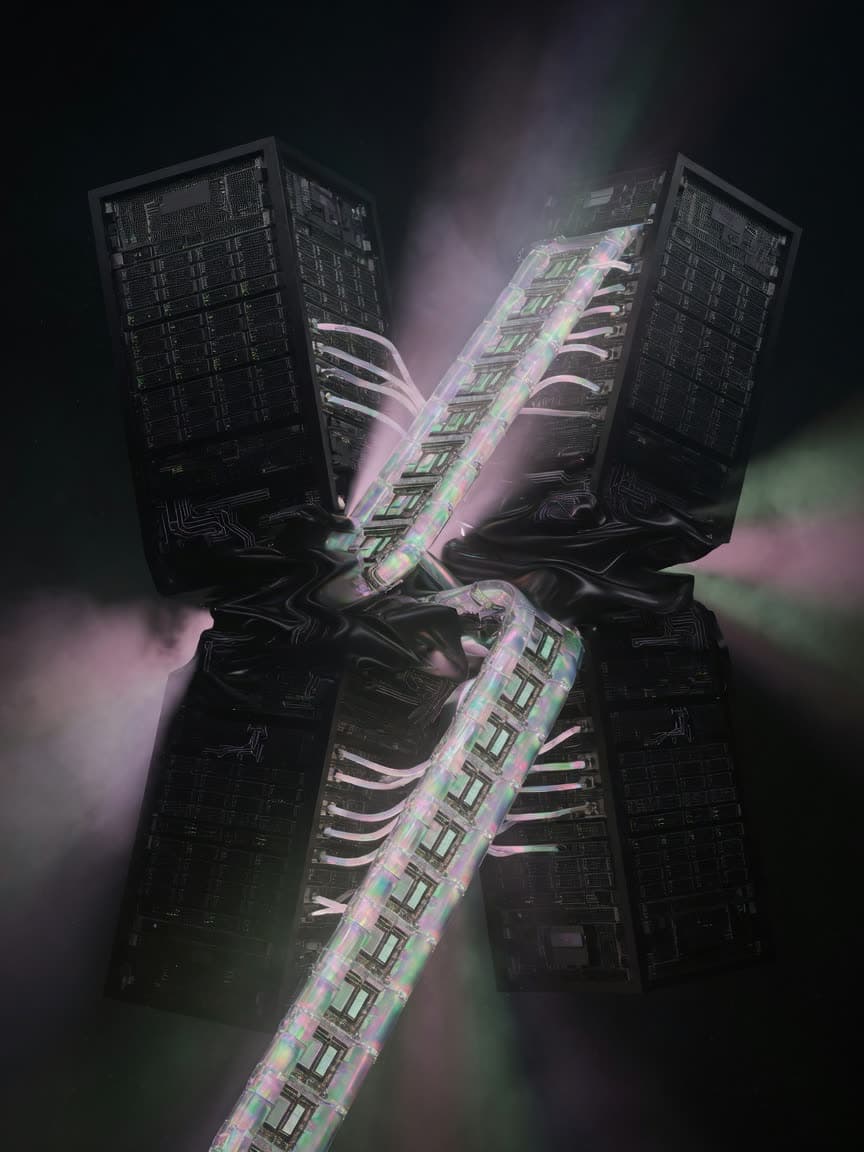
On June 5, a SpaceX securities filing confirmed the most telling sentence in tech this year: Google will pay Elon Musk's company $920 million a month — roughly $32 billion through mid-2029 — to lease 110,000 Nvidia GPUs running inside xAI's data centers. Read that again. Google, which builds its own TPUs and operates one of the largest compute fleets on Earth, is renting borrowed silicon, at gunpoint pricing, from the infrastructure arm of its most combative competitor. Google's own explanation was almost plaintive: it needed "bridge capacity" because demand for Gemini Enterprise had run "even higher than we expected."
That is not a footnote. That is the whole map of 2026. The defining scarcity in Big Tech is no longer talent, data, or even capital — it is the ability to turn dollars into FLOPs fast enough. When a trillion-dollar company would rather feed a rival than miss a quarter of demand, the old competitive logic has been suspended. Everyone is now a customer of the same bottleneck.
The buildout ate the business model
You can see the bottleneck's shape in Nvidia's numbers. Its most recent quarter put revenue at $81.6 billion, up 85% year over year, with the data-center segment alone at $75.2 billion — 92% of the company. Jensen Huang's framing has hardened from salesmanship into something closer to doctrine: agentic AI has "arrived," the AI-factory buildout is "accelerating at extraordinary speed," and every runtime — cloud, on-prem, PC, or robot — collapses into one repeating pattern of a model wrapped in a harness wrapped in tools. Nvidia even floated a new $200 billion CPU ambition with its Vera chip, because owning the accelerator was no longer enough; it wants the whole box.
The SpaceX deal isn't an outlier in this picture, it's the genre. A month before the Google lease, SpaceX agreed to rent its entire 220,000-chip Colossus 1 cluster to Anthropic. Compute is being bought in bulk, sight unseen, on multi-year commitments, by companies who have stopped pretending they can build fast enough alone. The hyperscaler that once defined vertical integration is now a tenant. That is the quiet humiliation the filings keep documenting, and nobody can afford to feel it for long.
What all that silicon is actually for
The reason demand keeps outrunning supply is that the product finally changed. For three years the industry sold conversation. In 2026 it is shipping action. Enterprise deployments have crossed from chatbot pilots into persistent agents that write their own tools, execute cross-system workflows, and close the loop without a human in the middle — the thing every keynote promised and few products delivered until now. Nvidia is even pushing "agent PCs" through Microsoft, Dell, and HP, betting the runtime moves to your desk.
And here is the part that should make you sit up: those agents have started transacting with each other. Coinbase's x402 payment standard — a stablecoin handshake triggered by an HTTP 402 — has moved into production and now sits under the Linux Foundation with Google, Stripe, Visa, Mastercard, and AWS all signed on. Early data shows more than 140 million autonomous agent transactions in nine months, average payment size 31 cents, mostly agents buying data, API calls, and compute from one another. It is a rounding error against $33 trillion in annual stablecoin volume — roughly 0.0001% — and that is precisely why it matters. The machine-to-machine economy is being plumbed now, while it's still too small to regulate and too obscure to fight over.
Stack the threads and the shape is unmistakable. Nvidia sells the picks. SpaceX, xAI, and the hyperscalers fight over who hoards the most of them. The agents those GPUs run are no longer talking — they are doing, and increasingly paying. The same physical-AI models now powering Boston Dynamics and LG humanoids are the ones drafting your contracts and settling their own invoices in USDC. It is one supply chain, end to end, and every layer is supply-constrained by the layer beneath it.
Which returns us to that $920-million-a-month line item. The lesson Big Tech learned in 2026 isn't that AI works — it's that owning the model means nothing if you can't power it. Pride is cheap; FLOPs are not. When Google decides it would rather enrich Elon Musk than tell enterprise customers to wait, the message to everyone watching is brutally simple: in this cycle, the company that controls compute writes the terms, and the rest of the trillion-dollar club lines up to sign.