
China Is Racing to Crack the Robot Hand
The hand is the hardest part of a humanoid — and Chinese startups like LinkerBot and Wuji are treating it as the bottleneck worth owning, backed by the same supply chain that built the world's EVs.
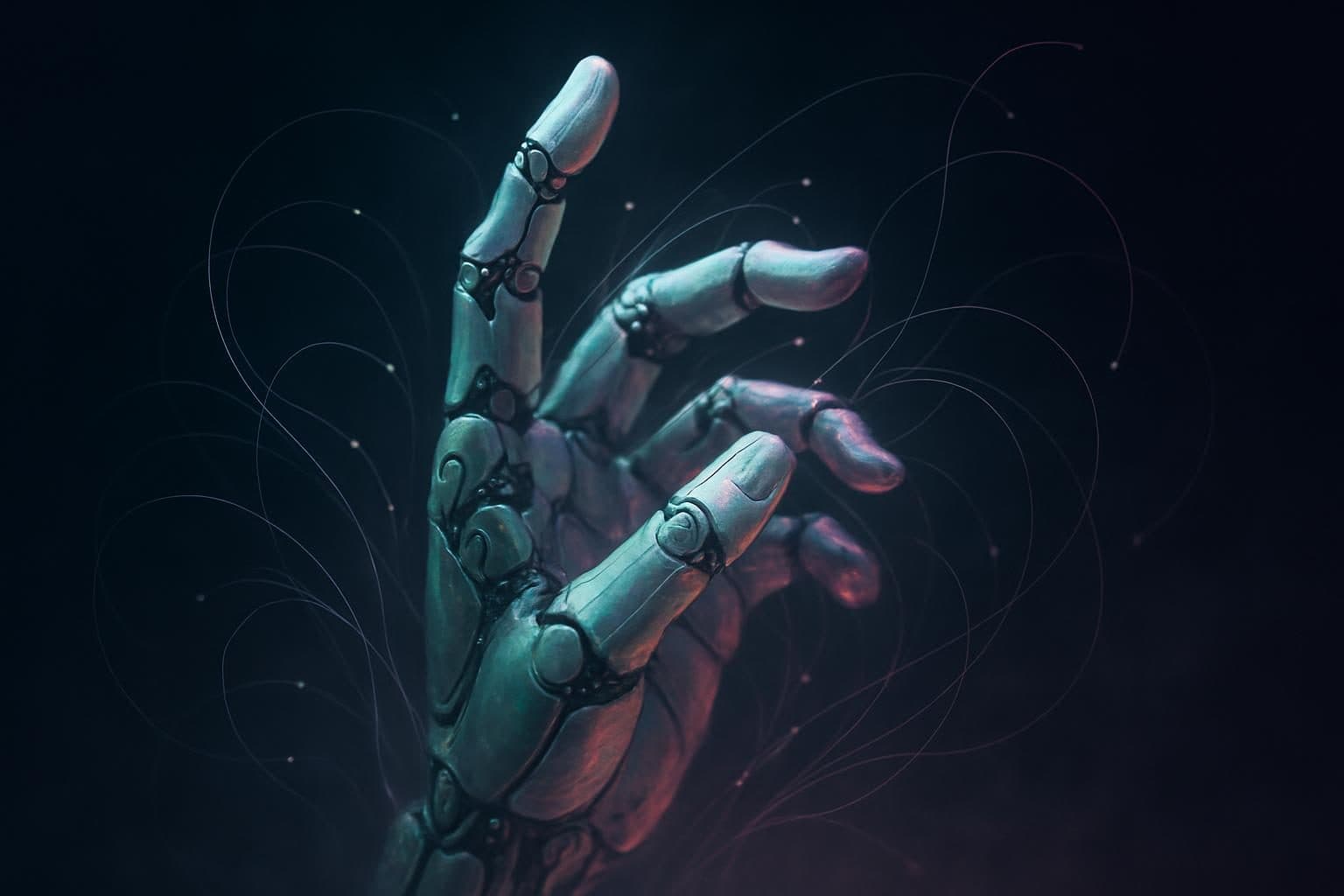
Everyone watching humanoids stares at the legs — the walking, the balance, the parkour videos. The people building them know the real bottleneck is the hand. And in mid-2026, a cluster of Chinese startups has decided the dexterous robotic hand is the piece of the humanoid worth owning, treating the hardest sub-problem in the field as the one most likely to mint a defensible business.
The hand is a ten-times problem in a one-tenth package
The clearest articulation of why hands are so hard comes from Zhou Yong, founder of LinkerBot, who put it bluntly: making a robotic hand is "one hundred times more difficult" than making a humanoid. "Its dexterity is 10 times that of other body parts," he said, "but its volume is only one tenth of other body parts." That is the entire engineering nightmare in one sentence. You have to pack the most degrees of freedom, the most actuators, and the most sensing of any part of the robot into the smallest physical envelope — a space the size of a human hand — and then make it reliable enough to do it thousands of times a day without failing.
A humanoid that can walk across a room but can't reliably pick up a wrench, fold a shirt, or handle a fragile part is a very expensive demonstration. The hand is what converts a walking torso into a worker. Which is exactly why solving it is worth so much: whoever makes the best hand at scale sells a component into every humanoid program on earth, regardless of whose robot it ships inside.
LinkerBot is scaling the thing before it's finished
LinkerBot is betting on volume as the path to getting good. The company reportedly produces about 5,000 hands per month and aims to double that output, while pursuing a valuation around $6 billion — a striking number for a company making a single sub-assembly rather than a whole robot. The logic is that manufacturing dexterous hands at scale is itself the moat. Every hand built surfaces failure modes, tightens tolerances, and drives down unit cost, and the supply-chain relationships you build shipping thousands of units are hard for a lab prototype to replicate.
It's a distinctly Chinese approach to a hard problem: don't wait for the perfect design, build a lot of the imperfect one and let production volume grind toward reliability. That strategy tends to look reckless right up until the cost curve makes it obvious, which is roughly the story of Chinese solar, batteries, and EVs over the past decade.
Wuji is attacking the data problem, not just the mechanics
The other half of the hand problem is teaching it what to do, and here Wuji Technology is taking a different angle. One of its flagship products is the Wuji glove — a sensor-filled wearable that collects not just movement data but the subtler signals of pressure and touch. That distinction matters more than it sounds. A human cracks an egg on the edge of a pan rather than crushing it because of continuous, high-resolution feedback about force and contact. A robot hand without that sensing can only ever be clumsy, no matter how many joints it has.
By capturing how humans actually apply force during manipulation, Wuji is building the dataset that makes dexterity learnable rather than hand-coded. It's the manipulation-data equivalent of what UMA and others are doing with demonstration learning — except aimed squarely at the tactile channel that vision-only systems miss. Mechanics get you a hand that moves; touch data gets you a hand that knows how hard to squeeze.
The supply chain is the unfair advantage
The reason these bets are concentrated in China isn't only government ambition, though that's real — Beijing has made "embodied AI" a national priority, pushing capital and policy toward robots that operate in the physical world rather than software alone. The deeper advantage is the supply chain. China's manufacturing base — much of it built up through the EV industry — means startups can source actuators, sensors, precision components, and skilled assembly faster and cheaper than peers in the United States. A dexterous hand is a nightmare of small, tightly-integrated parts, and being ten miles from a hundred suppliers who can iterate a component overnight is the kind of edge that doesn't show up in a demo video but decides who ships at scale.
Why this is the fight to watch
The humanoid narrative has been dominated by whole-robot companies and their charismatic full-body demos. The hand race reframes the whole thing as a components war, and components wars have a way of quietly deciding platforms. If a LinkerBot or a Wuji ends up as the default supplier of dexterous hands — the way a handful of firms became the default suppliers of camera modules or lidar — then the value in humanoids migrates toward the part everyone underestimated, and it migrates toward China.
There's a real strategic exposure buried here for the rest of the field. American and European humanoid programs can design brilliant robots and still find that the single hardest, highest-value sub-assembly is best sourced from a Chinese supplier scaling faster than anyone can match. The legs get the attention. The hands may get the market.