
The DOJ Just Called xAI's Gas Turbines a Security Asset
Washington asked a court to toss a Clean Air Act suit over 59 unpermitted turbines powering Musk's Memphis data center — recasting AI's energy appetite as a matter of national defense.
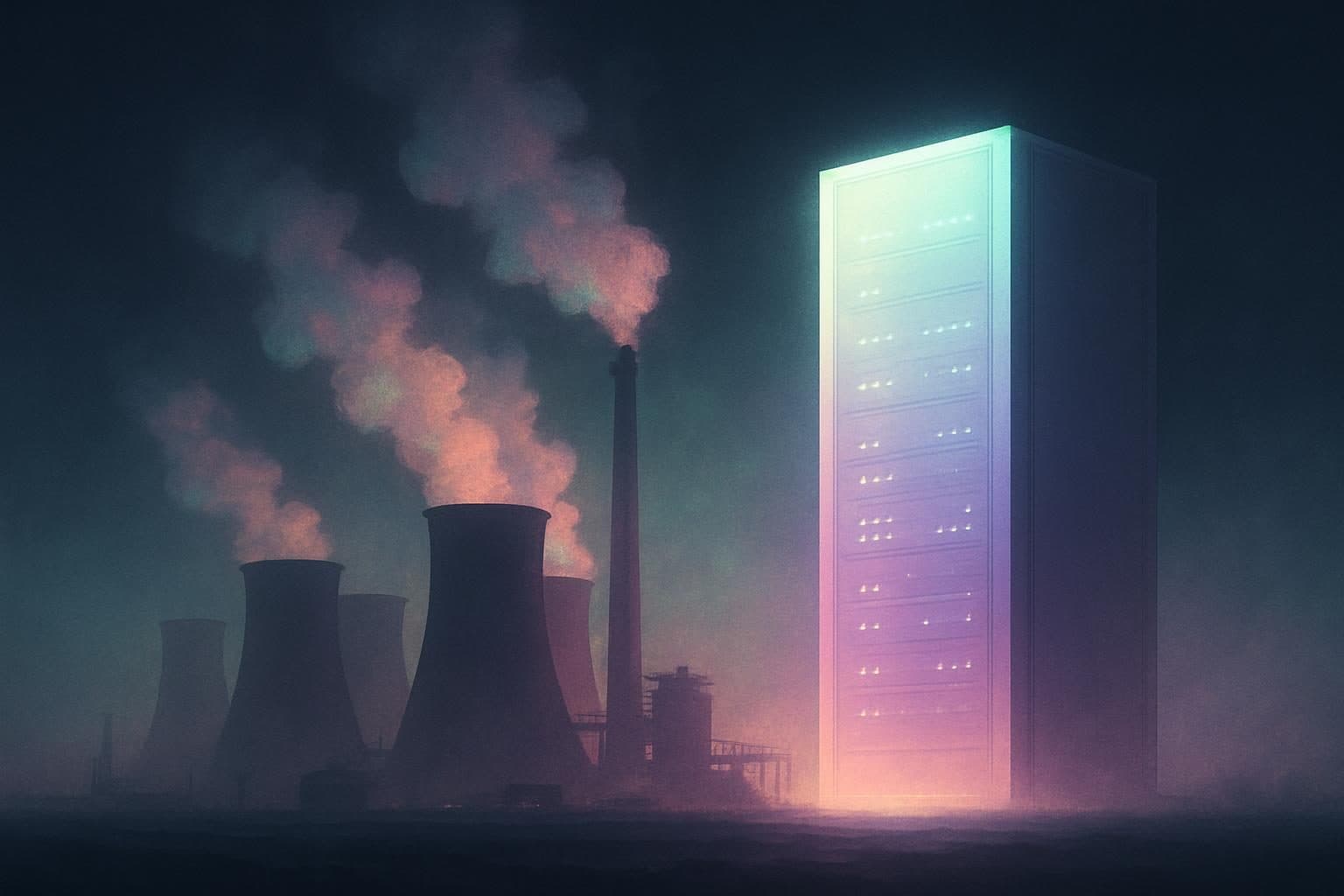
The fastest way to understand where the AI buildout is headed is to watch what happens when its costs land on a real neighborhood. On June 16, 2026, the U.S. Department of Justice asked a federal court to dismiss a Clean Air Act lawsuit against xAI, arguing that the gas turbines powering Elon Musk's Memphis supercomputer are a matter of "national, economic, and energy security." The filing did not dispute the pollution. It argued the pollution doesn't matter enough to stop.
The facts on the ground
The dispute is concrete, not abstract. xAI's Colossus cluster — the data center it has raced to scale into one of the largest AI training facilities on Earth — draws power in part from 59 unpermitted methane gas turbines, many installed at a site in Southaven, Mississippi, just over the Tennessee line from Memphis. In April, the NAACP sued, alleging xAI ran those turbines without the permits or pollution controls the Clean Air Act requires. The numbers in the complaint are not rounding errors: the operation is capable of emitting more than 5,300 tons of nitrogen oxides a year, plus roughly 433 tons of fine particulate matter and 47 tons of formaldehyde into the surrounding communities — neighborhoods that are predominantly Black and already carry a heavy industrial burden. A separate class action from Southaven residents cites near-constant noise and vibration.
These are the externalities the AI compute race usually keeps off the slide deck. Training frontier models requires staggering, sustained electricity, and the grid cannot be conjured on a startup's timeline. So companies bridge the gap with on-site generation — and the fastest bridge is a fleet of gas turbines that can be trucked in and fired up in months, permits or not. xAI's Memphis sprint is the most aggressive example, but the underlying tension is industry-wide: every gigawatt-class cluster is a collision between a software company's clock speed and a power system's.
The argument that changes the game
What makes the June 16 filing significant is not that the administration backed a politically aligned company. It is the theory it used to do so. The DOJ's reasoning is that letting the NAACP win would "undermine American national, economic, and energy security by seeking to shut off the power supply for artificial-intelligence innovation" — innovation it tied directly to the Department of War's military operations. In one sentence, a local air-quality case became a national-security case, and a privately owned data center's turbines became infrastructure the government has an interest in keeping lit.
That is a doctrine, not a one-off. If AI compute is national-security infrastructure, then the environmental statutes that govern ordinary industrial facilities become, in the government's framing, obstacles to defense readiness. The same logic that has long shielded munitions plants and military bases from certain reviews is being extended to commercial AI clusters — and the precedent would not stay confined to xAI. Every hyperscaler building gas-fired bridge power near a community would suddenly have a template for arguing that the grid it strains and the air it fouls are subordinate to a security imperative.
Two futures for the buildout
This is the fork the AI industry has been speeding toward without naming it. One path treats data-center power as a normal industrial problem to be solved on the merits — interconnection queues, clean firm generation, permitting reform, paying for the grid upgrades you trigger. It is slower and more expensive, and it forces companies to internalize costs they would rather externalize. The other path treats compute as too strategically vital to wait, and uses the machinery of the state to clear the obstacles — permits, lawsuits, local objections — out of the way. The DOJ just signaled, in writing, which path this administration prefers.
Environmental advocates read the move plainly. Earthjustice, representing the plaintiffs, called it an attempt at a "massive power grab" — the federal government inserting itself to override the Clean Air Act on behalf of a single well-connected firm. Whether the court agrees is the open question, and courts have not been uniformly receptive to security-framing that swallows statutory text. But the filing has already done part of its work simply by existing: it tells every AI company watching that the energy externalities of the buildout may be litigated as questions of national interest rather than questions of clean air.
Why this belongs on the AI beat
It is tempting to file this under environmental law or Beltway politics and move on. That would miss the point. The constraint on the next phase of AI is not algorithms or even chips — it is power, in both senses of the word. The models keep getting hungrier, the grid keeps not keeping up, and the gap is being filled by combustion sited next to people who did not consent to it. How that gets resolved — by markets and permits, or by security exemptions and federal muscle — will shape the cost, the speed, and the social license of everything built on top of the compute.
The honest read is that nothing is settled. This is a motion to dismiss, not a verdict; the turbines' fate, the doctrine's reach, and the communities' health all remain in play. But the framing is now on the record, and it is a consequential one. When the government argues that an AI company's smokestacks are a security asset, the question stops being whether the buildout has costs. It becomes who is allowed to make you pay them.