
The EV Price War Has No Floor
BYD broke the unspoken truce on margins. Now Tesla, Rivian, and a wounded legacy industry are discovering how far the battery cost curve can fall — and who gets crushed on the way down.
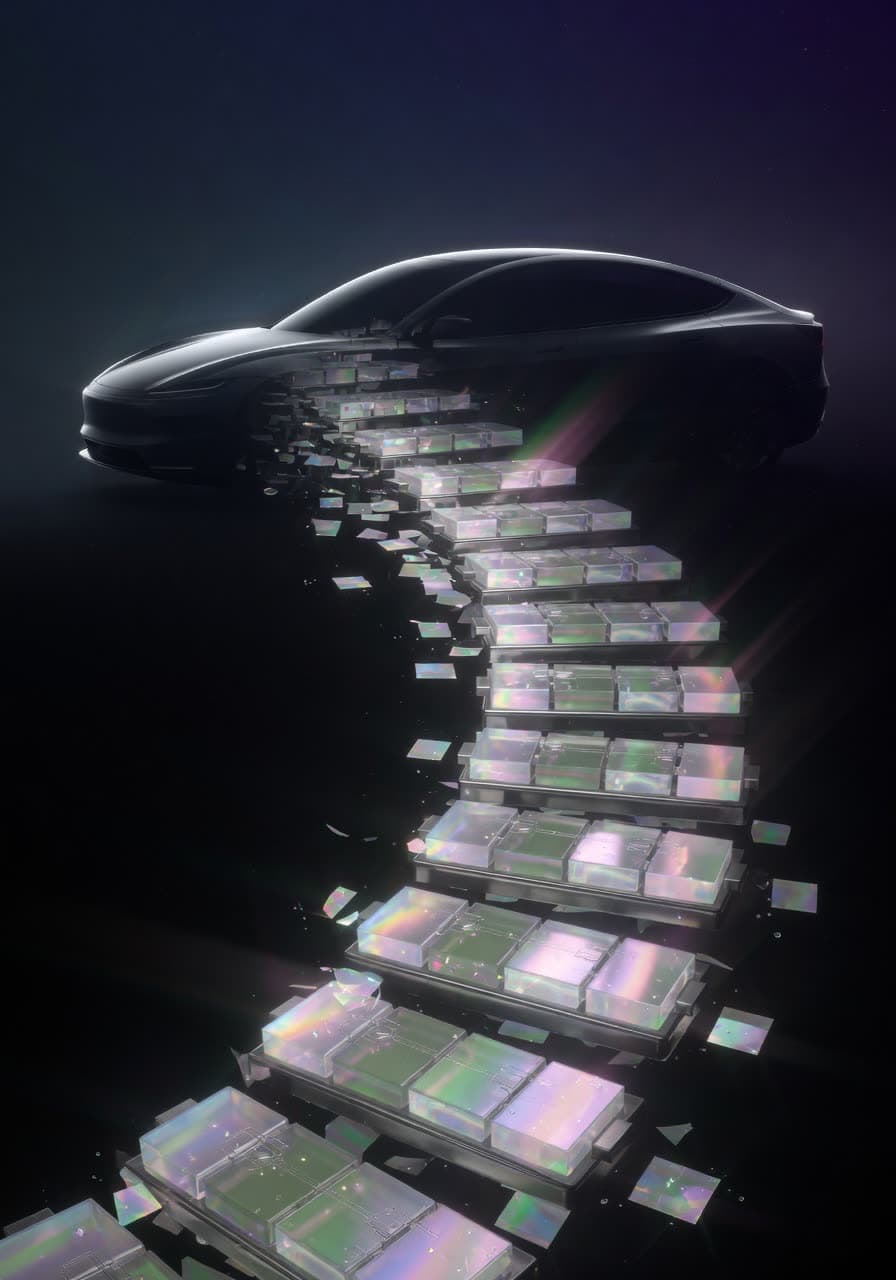
In April, BYD did something that should have been impossible. It launched a version of its Qin L sedan in China with the 5-minute "Super e-Platform" fast-charge system and priced the family at roughly 119,800 yuan — under $17,000 — while still, by every credible teardown, making money on it. Tesla's cheapest car in the same market costs nearly double. That single price tag is the clearest signal yet of where this decade's defining industrial contest is heading: not toward a comfortable, subsidized transition, but toward a brutal deflationary spiral that legacy automakers spent twenty years insisting could never happen.
The EV price war is no longer a Chinese domestic story. It is the global auto industry's reorganizing principle.
The cost curve became a weapon
For most of the 2010s, the lithium-ion learning curve was treated as a friendly tailwind — pack prices fell, range climbed, everyone won. BloombergNEF's annual battery survey told the comforting version: average pack prices dropped from above $1,000 per kilowatt-hour in 2010 to around $115 by the end of 2024, and the cheapest lithium-iron-phosphate (LFP) cells coming out of China are now reported below $60/kWh at the cell level. What changed is who controls that curve and what they're willing to do with it.
BYD controls its own cells (the Blade LFP pack), its own chips, much of its own software, and increasingly its own ships — it has been buying car carriers to move vehicles to Europe and South America without relying on third-party logistics. Vertical integration of that depth means BYD can pass cost declines to buyers faster than rivals can respond, and absorb a price cut on a Tuesday that a Volkswagen committee would still be debating in the third quarter.
When the company that makes the cell also makes the car, the battery stops being a supplier's margin and becomes a pricing lever.
The result, through 2025 and into 2026, has been wave after wave of cuts across the Chinese market — and a brutal consolidation. Beijing itself has started warning domestic players to stop the "rat-race competition," a remarkable signal that the price war is now severe enough to alarm the government that helped create it.
Tesla's missing weapon
Tesla spent 2025 in an awkward posture. Its volume slipped year over year — the first annual decline in the company's modern history — as the aging Model 3 and Y faced fresher, cheaper Chinese rivals and a brand increasingly tangled with Elon Musk's politics. The long-promised cheaper model arrived, but as stripped-down "Standard" trims of existing cars rather than the genuinely new $25,000 platform the company once teased and then quietly killed in favor of robotaxi ambitions.
That decision looks more consequential by the month. Tesla's bet is that autonomy and energy storage, not cheap cars, are where the margins live. It may be right. But it has voluntarily ceded the entry segment — the part of the market BYD is using to vacuum up the next billion drivers across Southeast Asia, Latin America, and an increasingly receptive Europe. Tesla still has the best charging network and formidable software, but in a price war, "best" loses to "cheap enough and good enough" more often than Silicon Valley likes to admit.
The American casualties
If the price war is uncomfortable for Tesla, it is potentially terminal for the U.S. startups. Rivian and Lucid both entered 2026 still losing money on a per-vehicle basis even after years of cost engineering. Rivian's salvation rests almost entirely on the cheaper R2, due to start production at its Normal, Illinois plant — a make-or-break volume play backed by a Volkswagen joint-venture software deal that gives it a lifeline of cash and a customer for its electrical architecture. Lucid, kept alive largely by Saudi Arabia's Public Investment Fund, is betting the Gravity SUV and a forthcoming midsize platform can finally get it to volume before the patience of its backers runs out.
Then there is the policy whiplash. The expiration of the $7,500 U.S. federal EV tax credit at the end of September 2025 pulled a hard lever on demand exactly as these companies needed it most. American EVs got more expensive to buy at the moment Chinese EVs got cheaper to build. The 100%-plus U.S. tariff wall keeps BYD's cars out of American showrooms for now — but it does nothing to help American brands compete in the export markets where the real growth is, and where BYD is already winning.
Tariffs can wall off a market. They cannot wall off a cost structure.
What the floor actually means
The optimistic reading is real: cheaper batteries mean cheaper EVs mean faster decarbonization, full stop. If a capable electric car costs $15,000 to $20,000 without subsidy, the transition stops depending on the goodwill of policymakers and starts running on pure economics. Sodium-ion cells — which BYD and CATL are both commercializing — promise to push entry-level costs lower still, trading some energy density for dirt-cheap, lithium-free chemistry well suited to small urban cars.
The pessimistic reading is also real. A price war with no floor is an extinction event for any automaker that can't match the lowest-cost producer, and right now that producer is Chinese and vertically integrated in ways Detroit and Wolfsburg structurally are not. Europe is the live battleground: BYD opened its Hungarian plant to build inside the EU's tariff perimeter, and legacy European marques are watching their home market get reorganized in real time.
The cars are getting better and cheaper faster than almost anyone forecast. That is unambiguously good for the planet and for drivers. Whether it is survivable for the incumbents who defined the twentieth-century automobile is a different question — and BYD has already answered it.
Kicker: The transition was supposed to be slow, subsidized, and led from the West. It turned out to be fast, deflationary, and led from Shenzhen. The floor isn't where the cost curve stops. It's where the weakest competitor does.