
The Camera on Your Face Doesn't Have an Off Switch
Meta has sold seven million pairs of recording glasses and owns 82% of a market it invented — and June 2026's gadget wave is betting the whole house on the always-on body.
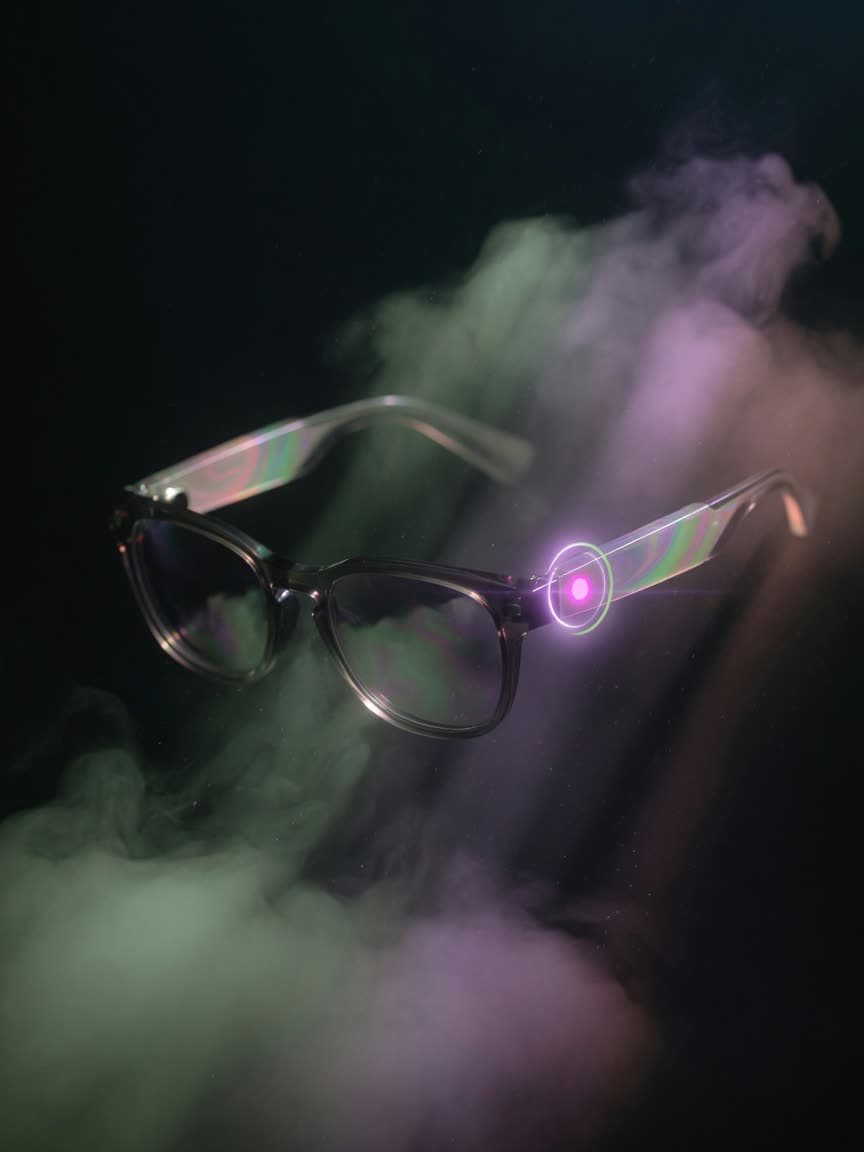
Seven million pairs. That's how many Ray-Ban Meta smart glasses have shipped, and they now command roughly 82 percent of a category that barely existed three years ago. The number that should worry you isn't the seven million faces wearing the camera. It's the uncounted millions standing in front of it.
On March 4, the Clarkson Law Firm filed suit in the Northern District of California alleging Meta marketed the glasses as "designed for privacy, controlled by you" while routing captured footage through a human review pipeline in Kenya — where data workers have reported sorting through graphic real-world video. The UK's Information Commissioner's Office and Kenya's Office of the Data Protection Commissioner have both opened investigations. Meanwhile, WIRED found code for an unreleased facial-recognition feature buried in Meta's AI app. The recording light on the frame? Owners have already worked out how to tape over it. The device class isn't shipping with a consent model. It's shipping with a market-share lead.
That gap — between adoption velocity and the social contract around it — is the real story of gadgets in 2026, and the entire industry just decided to widen it.
Everyone Is Building the Same Device
At Google I/O this spring, Google unveiled its first consumer smart glasses: audio-first, Gemini-powered, no display, wrapped in Gentle Monster and Warby Parker frames so they read as eyewear rather than equipment. iFlytek launched its own "super AI assistant" glasses at BEYOND Expo in Macau. Samsung and Google's "Intelligent Eyewear" and Xreal's Project Aura are queued behind them. And the most-watched entrant has no display at all: OpenAI and Jony Ive's screenless companion — a behind-the-ear wearable codenamed Sweetpea, plus a pen called Gumdrop — is tracking for the second half of this year, with Foxconn reportedly tooled for 40 to 50 million units. Sam Altman keeps promising it will feel more "peaceful" than a phone.
Read the spec sheets side by side and the convergence is total. Always-on microphone. Ambient context. An AI that listens before you ask. The pitch is identical across every keynote: the assistant that finally leaves the screen behind and rides on your body. The smartphone era was about a device you picked up. This era is about a device you stop noticing — which is precisely the problem.
This is the wearable expression of the larger shift everyone in AI is chasing right now: agents moving from talking to acting. A chatbot that drafts an email is a tool you supervise. A pendant that overhears your meeting, recaps it, and books the follow-up is an agent operating on the raw feed of your life. The frontier labs spent 2025 proving models could reason; 2026 is the year they decided the missing input was you — continuously, ambiently, by default. The compute backing it is the same supremacy Nvidia is renting out to everyone, now pointed at a sensor strapped to your temple.
The Quiet Part Is the Business Model
At CES 2026, the show floor laid out what Android Central flatly called a "Black Mirror future" — wearables pitched as always listening, always watching, devices that "know everything about you," sold as a feature. Meta is reportedly targeting around 10 million wearables shipped in the back half of this year. The Limitless pendant already records the conversations happening around its wearer and turns them into a searchable transcript of the day. None of these companies are coy about the ambition. They're coy about one thing: the people who never opted in.
Here is the asymmetry that no glossy launch video addresses. When you bought a smartphone, the camera pointed where you aimed it, and pulling it out was a visible act. The whole etiquette of being photographed was built on that tell. Face-worn, always-on capture erases the tell. The bystander has no interface, no toggle, no recourse — and, as the lawsuits make plain, frequently no idea. The product is sold to the wearer; the cost is paid by everyone in frame. That's not a bug the next firmware update patches. It's the architecture.
What makes this moment different from the Google Glass flop of a decade ago isn't the technology — Glass had a camera too. It's that the technology now works, sells, and has a defensible lead, while the norms, the law, and the consent mechanics are running years behind. Seven million units shipped before a single jurisdiction settled what these things are allowed to do.
The gadget desk's job is usually to tell you what to buy. This one's verdict is narrower: the most important spec on the 2026 wearable isn't the chip, the battery, or the AI model. It's whether the device can prove, to the person standing across from you, that it's off. So far, not one of them can — and not one of them is being graded on it.