
Graphene Finally Has a Job
For twenty years the 'wonder material' was a Nobel Prize in search of a product. The thing that's changing isn't the science — it's the manufacturing, and the unglamorous places it's quietly shipping.
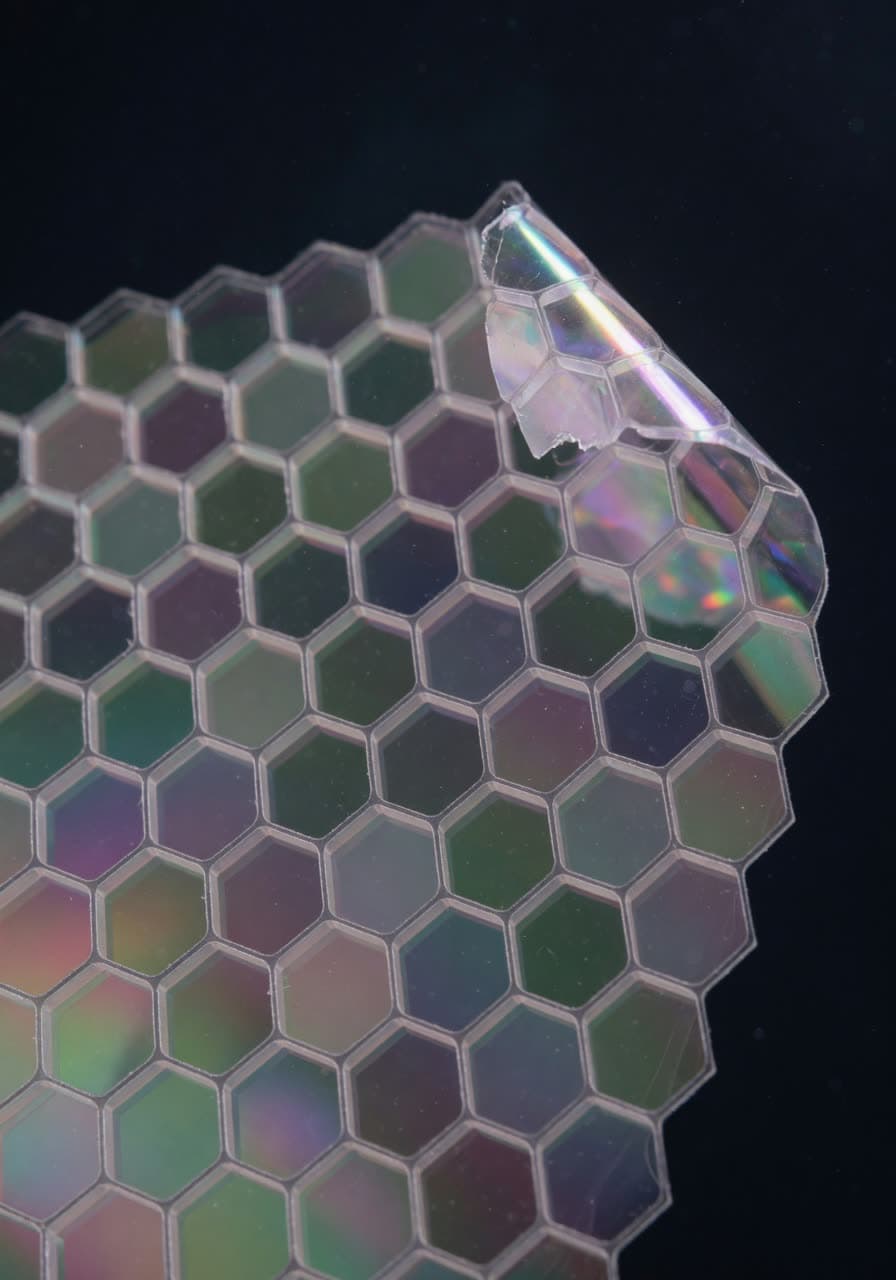
In 2010, Andre Geim and Konstantin Novoselov won the Nobel Prize in Physics for isolating graphene with, famously, a roll of Scotch tape. A single layer of carbon atoms arranged in a hexagonal lattice, it was stronger than steel, more conductive than copper, nearly transparent, and almost weightless. The press did what the press does. Graphene would replace silicon. It would give us bendable phones, room-temperature superconductors, space elevators. A material this good, surely, was a product waiting to happen.
Fifteen years and several billion dollars of research funding later, you are not reading this on a graphene screen. The space elevator remains theoretical. And yet, quietly — in battery packs, behind AI accelerators, inside the resin of wind-turbine blades — graphene is finally doing real work. The story of how it got there is less about a scientific breakthrough than about a slow, grinding fix to the one problem nobody could hype their way past: making the stuff at a price and quality a factory will actually pay for.
The two-decade bottleneck was never the physics
The dirty secret of the graphene boom is that the lab miracle and the industrial product were never the same material. Geim's pristine, single-crystal monolayer — the one with all the world-beating properties — is fiendishly hard to manufacture at scale. The two real production routes each break in a different place.
Chemical vapor deposition (CVD) grows beautiful, large-area films on copper foil and is what you want for electronics and transparent conductors. It's also slow, energy-hungry, and requires transferring an atom-thick sheet off its metal substrate without tearing it — a step that has humbled a generation of process engineers. The other route, liquid-phase exfoliation, essentially blends graphite down into a slurry of tiny flakes. It's cheap and scalable, but what comes out is not "graphene" in the Nobel sense. It's a distribution of few-layer platelets, often closer to fine graphite, with defects, oxygen contamination, and wild batch-to-batch variation.
That gap fed a credibility crisis. A widely cited 2018 study by the National University of Singapore tested graphene from dozens of commercial suppliers and found that almost none of it was actually graphene — most samples were under-characterized graphite powder, and some contained significant contamination. Buyers got burned. The word "graphene" on a spec sheet started to mean nothing, which is roughly the worst thing that can happen to an industrial input.
So the real work of the last decade wasn't discovering new properties. It was boring: standardization (the ISO and IEC finally published terminology and measurement standards so "graphene" means something on a purchase order), in-line quality control, and figuring out which applications actually need pristine monolayer versus which just need a cheap carbon additive that's good enough and consistent.
Where it's actually shipping
The honest answer to "what is graphene in today" is: more than the skeptics admit, less than the hype promised, and almost never as the headline ingredient.
Energy storage is the clearest commercial beachhead, and it's mostly the cheap flake material doing humble work. Add a small fraction of graphene to a lithium-ion electrode and you get a better-connected conductive network: faster charging, better performance in the cold, longer cycle life. You are not buying a "graphene battery" — that phrase is almost always marketing — you're buying a conventional cell with a graphene additive shaving real percentage points off charge time. China's lithium supply chain has been the most aggressive adopter here, and the same logic is moving into silicon-anode and lead-acid chemistries. Graphene also underpins a separate, genuinely differentiated product: supercapacitors and hybrid cells from outfits like Skeleton Technology, where the enormous surface area of graphene-derived "curved" carbon enables very high power density for grid buffering, rail, and automotive uses.
Thermal management may be graphene's best near-term match, and it's being pulled forward by the AI buildout. Data-center accelerators dump punishing amounts of heat into a shrinking footprint, and graphene films conduct heat laterally better than copper while weighing almost nothing. Graphene heat-spreaders and thermal-interface materials are already inside high-end smartphones (Huawei and others have shipped them for years) and are now being qualified for the GPU and networking gear at the center of the AI capex wave. It's an unglamorous role — a thin black film spreading hot spots — but it maps perfectly onto a problem the industry is desperate and willing to pay to solve.
Composites are the quiet volume play. Drop a fraction of a percent of graphene into a polymer, concrete, or epoxy and you can meaningfully boost strength, stiffness, or conductivity for almost no added weight. It's showing up in high-end bike frames and tires, sporting goods, marine coatings, and — the application materials people actually get excited about — concrete, where a tiny graphene dose can cut the cement required and therefore the carbon footprint of one of the planet's dirtiest materials.
Sensors and electronics remain the long game. Graphene's sensitivity makes for excellent biosensors and gas detectors, and the CVD film quality keeps improving. But this is where the twenty-year timelines still apply.
Graphene's commercial breakthrough looks nothing like the press releases. It's an additive measured in single-digit percentages, sold into supply chains that never say its name on the box.
The thing that actually changed: cost and consistency
If you want one number to watch, watch dollars per kilogram. A decade ago, usable graphene material ran into the hundreds or thousands of dollars per kilo, which confined it to labs and vanity prototypes. The bulk flake material has since fallen by orders of magnitude as producers scaled up. At a low enough price with tight enough consistency, the calculus flips: a manufacturer will tolerate a new additive if it costs little, drops into the existing process, and reliably delivers a measurable gain.
That, more than any lab result, is the unlock. Companies are reaching profitability not by selling exotic monolayer film but by selling tonnes of well-characterized flake into batteries, tires, and concrete. Manchester's National Graphene Institute and the surrounding cluster spent years pushing the science; the commercial momentum of the last few years has come from process engineers and quality managers making the material boring, repeatable, and cheap.
A second quieter shift is on the high end. CVD producers have steadily improved film uniformity and wafer-scale transfer, and the semiconductor industry's interest is real — graphene and related 2D materials keep appearing in research roadmaps as silicon's scaling runs out of room. But that's a story for the 2030s, told in research papers and pilot lines, not in this year's revenue.
Realistic expectations
Graphene will not replace silicon this decade. There is no graphene battery in your phone, and the "stronger than steel" line is true of a single perfect flake and irrelevant to a bucket of the powder you can actually buy. Treat any product that leads with the word graphene as a marketing flag, not a spec.
But the cynics who wrote it off as permanent vaporware were also wrong. The pattern here is the normal, unglamorous arc of a materials technology — the same one carbon fiber walked from exotic aerospace curiosity to commodity over decades. Graphene is now a real, growing, modestly profitable input, valuable precisely where it does an invisible supporting job: a few percent in an electrode, a film behind a chip, a dusting in a polymer.
The wonder material never arrived. A useful one did. That's the version that ships.