
The Year Orbit Became a Conveyor Belt
SpaceX is chasing 145 Falcon 9 flights while Blue Origin re-flies a booster and Rocket Lab readies Neutron — cadence, not spectacle, is now the metric that matters.
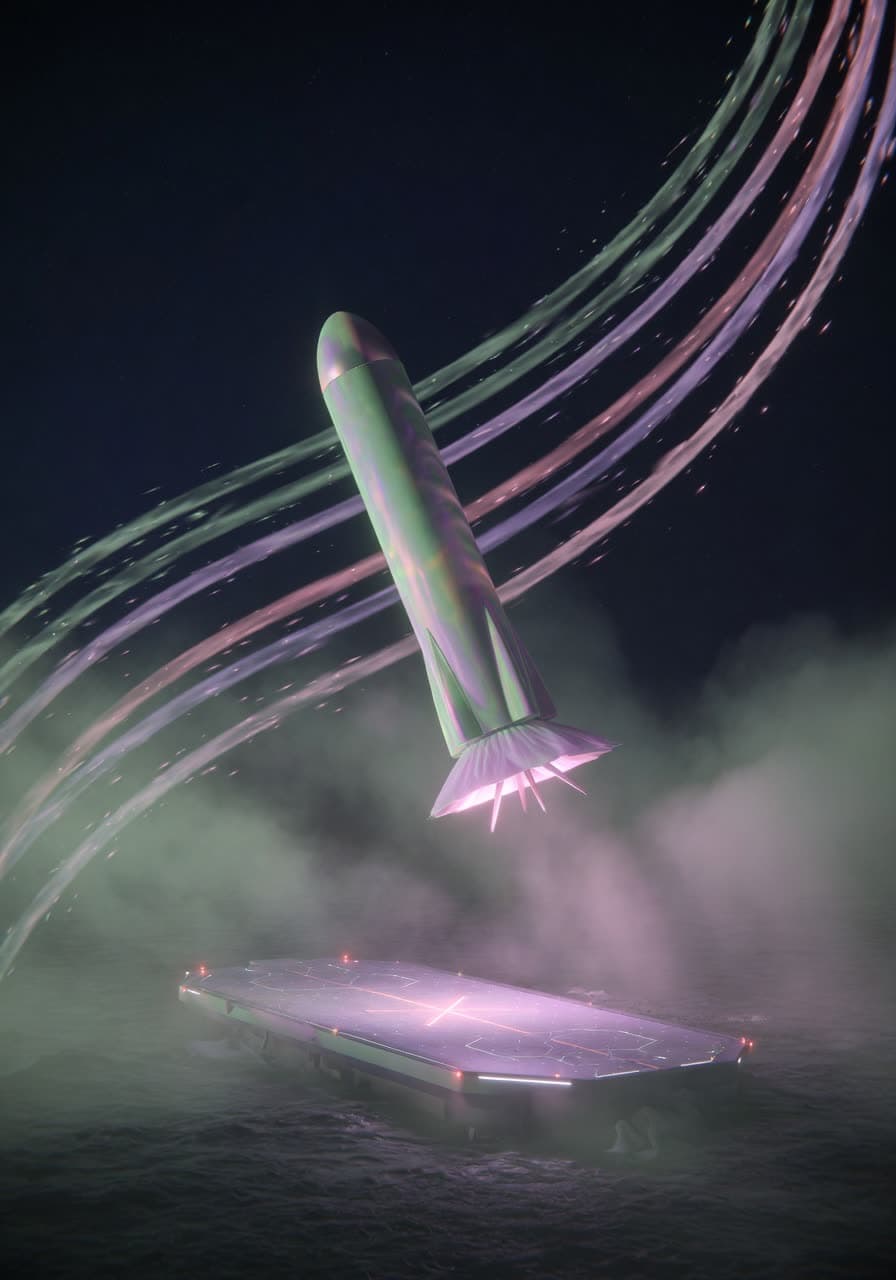
By the first week of June, SpaceX had already flown its Falcon family 66 times this year — 65 Falcon 9s and a single Falcon Heavy — and Gwynne Shotwell is still telling reporters the company expects "maybe 140, 145-ish" by December. Read that number slowly. It works out to a Falcon 9 leaving Earth roughly every sixty hours, every week, for a year, from a single manufacturer. The thing worth noticing is not that the number is large. It is that nobody flinched when she said it. The space industry has quietly crossed the line where launching an orbital rocket stopped being an event and started being a logistics problem.
That shift — from spectacle to schedule — is the real story of 2026, and it is being written in cadence, not in fireworks. Global orbital launches are tracking past 250 for the year, with SpaceX alone accounting for something near 40 percent of them. The interesting frontier is no longer "can you reach orbit." It is "how fast can you turn the hardware around and do it again." Reuse was the unlock; cadence is the payoff being collected now.
Reuse stops being a stunt
The clearest tell came on April 19, when Blue Origin re-flew a New Glenn booster for the first time — the very same first stage that had carried two NASA spacecraft toward Mars the previous November, recovered at sea and sent back up. It was genuinely historic: only the second company in existence to land and re-fly an orbital-class heavy booster. It was also, in true 2026 fashion, imperfect — the mission deposited its BlueBird satellite into the wrong orbit. Both facts are the point. Dave Limp has said Blue Origin wants the New Glenn booster turned around every thirty days to hit its cadence targets. The hard part is no longer the landing. The hard part is the refurbishment line behind it, the unglamorous industrial throughput that decides whether you fly once a quarter or once a month.
Rocket Lab is betting the same way with Neutron, its medium-lift, partially reusable vehicle now slated to arrive at Wallops Island and attempt a debut no earlier than Q4. Even its first flight is designed around the economics rather than the theater — a soft ocean splashdown instead of a hero landing, because the goal is to validate the recovery path, not to win the highlight reel. Three different companies, three different stages of maturity, one shared conviction: the rocket that matters is the one you don't have to rebuild.
To appreciate how fast this normalized, rewind seven years. In 2022 a single vehicle type breaking 60 launches in a calendar year was a world record — Falcon 9 toppling a Soyuz mark that had stood since 1979. By 2023 the Falcon family cleared 96. Now 60 is a rounding error reached before spring, and the conversation has moved entirely to triple digits from one company. The cadence curve in launch has the same vertical, almost embarrassing slope as the cost curve in inference or the capability curve in agents: a number that was an industry ceiling becomes a quarterly checkpoint, and the people inside it have already stopped being impressed.
There is a tension worth naming here, because the cadence story is not all upward. SpaceX is actually letting Falcon 9 ease off its theoretical maximum this year, repurposing assets — including a droneship — to stand up Starship operations in Florida. Starship itself has flown twelve times now, seven successes and five failures, with Flight 12 in May marking the first test of Version 3. The empire's most prolific workhorse is being throttled to feed the thing meant to replace it. That is what confidence in a cadence looks like: you can afford to slow your record-setter because you trust the pipeline behind it.
It rhymes with what is happening everywhere else in technology in 2026. The generative-video labs are no longer racing on whether a model can produce a clip but on how cheaply they can render the ten-thousandth. AI agents stopped being demos and became infrastructure the moment the conversation turned from "can it reason" to "how many can you run in parallel without supervision." Nvidia's grip on the era was never about a single chip; it was about manufacturing compute as a fungible utility. Across every frontier, the prestige has migrated from the first instance to the millionth — from the launch to the launch rate. Orbit is simply the most physical, most expensive version of the same lesson.
The risk in all of it is the same risk a conveyor belt always carries: when the cadence is the product, a wrong-orbit satellite or a Version 3 anomaly is no longer a headline, it is a line item. The market has already priced in that some fraction will fail, the way it prices in agent hallucinations or a video model's bad frame. That is either maturity or complacency, and we won't know which until something expensive breaks at full speed. For now, the most radical fact in spaceflight is how routine it has become — and how much that routineness is starting to look like the defining texture of this entire technological year.