
The Infinite Inventory: How AI Is Rewriting the Rules of Matter
From DeepMind's robotic synthesis labs to solid-state batteries finally escaping the lab, the materials discovery pipeline has been permanently rewired.
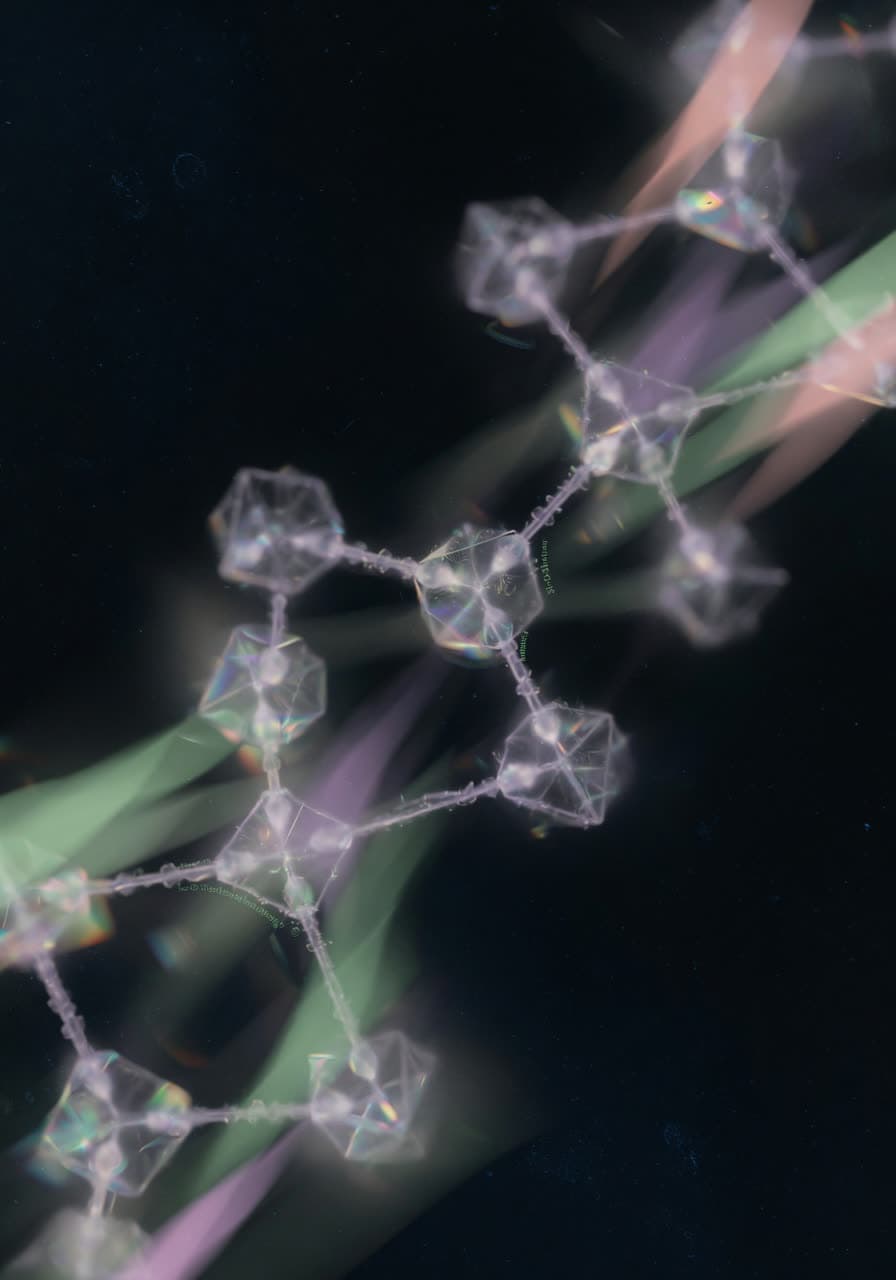
The chemistry lab at Lawrence Berkeley National Laboratory ran without a break for seventeen straight days. No grad students, no principal investigators making judgment calls at the bench — just robots and inference. In that stretch, the A-Lab autonomously attempted to synthesize 58 materials predicted by Google DeepMind's GNoME model, succeeding in 41 cases. That's a hit rate most human-driven research programs don't approach in a year of deliberate work.
That experiment, which became a landmark Nature paper in late 2023, planted a flag. What's happened since is a full restructuring of how materials science actually gets done — one that is, as of mid-2026, visibly accelerating into the commercial layer.
GNoME Grows Up
Google DeepMind's Graph Networks for Materials Exploration has by now catalogued 2.2 million structurally stable crystals, of which over 736 have been independently synthesized by external labs worldwide. The model reaches ~80% precision in predicting thermodynamic stability — roughly 30 points ahead of conventional computational approaches. For context, that delta is the difference between a heuristic and a hypothesis engine.
The model is not the product. The loop is the product.
DeepMind's planned automated materials laboratory in the UK — announced as part of a multidisciplinary Gemini-integrated facility — closes that loop at industrial scale: Gemini proposes candidates, robotics synthesize and characterize them, results feed back into the model. Hundreds of materials per day, iterated. When that facility comes fully online, the addressable search space of materials science effectively becomes the compute budget, not the headcount.
The broader shift is methodological. Fujitsu's AI platform, Kozuchi, has already been applied to kagome superconductors — specifically cesium vanadium antimonide — to identify electron-interaction mechanisms that drive superconductivity. Fujitsu opened trial access to that discovery workflow in early 2026. Tohoku University is a co-investigator. The academic-industrial boundary on materials research is dissolving faster than most institutions have updated their IP agreements.
The Battery Reckoning
Solid-state batteries have been the most reliably overpromised technology in energy storage for the better part of a decade. Announcements have been a cottage industry. But 2026 is where at least some of that promise is becoming measurable.
GAC-backed Greater Bay Technology rolled out its first A-sample all-solid-state cells in April 2026, reporting energy densities between 260 and 500 Wh/kg — nearly double what current production EV packs deliver. The cells passed needle penetration, extrusion, and thermal shock tests without ignition. GBT is targeting GWh-scale mass production before end of year.
At CES 2026, Donut Lab claimed the first production-ready solid-state battery system, already deployed in Verge motorcycles. Charge rate: up to 60 kilometers of range per minute. The claims draw healthy skepticism from incumbent suppliers — Seeking Alpha flagged broad industry doubt — but the fact that two organizations are making concrete volume-production claims within the same six-month window is itself a signal.
The materials unlock here is the electrolyte: replacing lithium-ion's flammable liquid with a solid ceramic or sulfide conductor eliminates the principal failure mode (thermal runaway) and enables the thinner electrode geometries that push energy density higher. The electrochemistry was proven years ago. The manufacturing challenge — sintering uniform, defect-free solid electrolyte layers at scale — is where most programs have collapsed. AI-assisted process optimization, specifically in identifying sintering parameters and stress-tolerance thresholds across material compositions, is the underreported wedge making 2026 different from 2022.
Optics and the Second Frontier
Energy storage gets the headlines. The optical materials story is quieter and possibly more disruptive over the longer arc.
Molybdenum oxychloride, characterized more rigorously this year, behaves like a metal and a glass simultaneously — an anisotropic conductor with properties that don't fit existing classification systems cleanly. Researchers flagging its potential for smart contact lenses and AR optics aren't being hyperbolic: the material's polarization behavior maps directly to requirements for ultra-thin waveguide displays.
Separately, the class of photonic chips that can generate, steer, and detect optical signals on a single integrated die has crossed a threshold in 2026 where the integration density finally makes data-center deployment economics look favorable against pure copper interconnects. That's a materials story as much as a chip story — the silicon photonics push depends on low-loss waveguide materials and precision deposition processes that AI-guided synthesis is beginning to accelerate.
Agents at the Bench
The pattern tying all of these developments together is the same one reshaping every other sector: the shift from AI as analysis tool to AI as actor. In materials science, that means agents that don't just predict properties but close the synthesis-characterization-feedback loop without human intervention between steps.
The security implications are not abstract. Autonomous lab systems connected to external model APIs carry the same supply-chain exposure as any other agentic pipeline — API keys in environment variables, model outputs that can be manipulated mid-loop if the inference endpoint is compromised. The observability tooling that AI infrastructure teams are building for software agents (tracing, anomaly detection on outputs) is starting to be demanded by lab automation vendors whose customers are pharmaceutical and defense clients. That's a market that didn't exist eighteen months ago.
The deeper implication is economic. If materials discovery time compresses from years to weeks, the amortization model for R&D changes. Companies that have historically licensed novel materials from national labs and universities are beginning to build internal discovery capacity, because the marginal cost of a candidate has dropped by orders of magnitude. NMIS — the UK's National Manufacturing Institute Scotland — is explicitly building data-driven, AI-led discovery as its core operational model across composites, coatings, metamaterials, and power electronics.
What Comes Next
The 2.2 million crystals in GNoME's stable-materials catalogue are not uniformly characterized. Most exist as computational predictions awaiting physical synthesis. The robotic lab infrastructure to work through that backlog is being built now — both by DeepMind and by a set of university programs and startups that have built compatible synthesis pipelines.
The implication: within three to five years, materials with specific target properties — a thermoelectric with a given ZT, a polymer electrolyte with a specific ionic conductivity window, a photonic material with a defined bandgap — will be discovered on demand rather than stumbled upon. The constraint will shift from discovery to manufacturing scale-up, which is its own hard problem. But it's a more tractable one.
Chemistry has always been the science of possibility. What's changed is who — or what — is doing the exploring.