
Meta's CAD$13B Alberta Data Center Puts a Gas Plant at the Heart of AI Infrastructure
Meta has broken ground on a 1-gigawatt AI facility in Sturgeon County — powered by a dedicated $4.6 billion natural gas plant — signaling how seriously hyperscalers are treating energy supply as a first-order build problem.
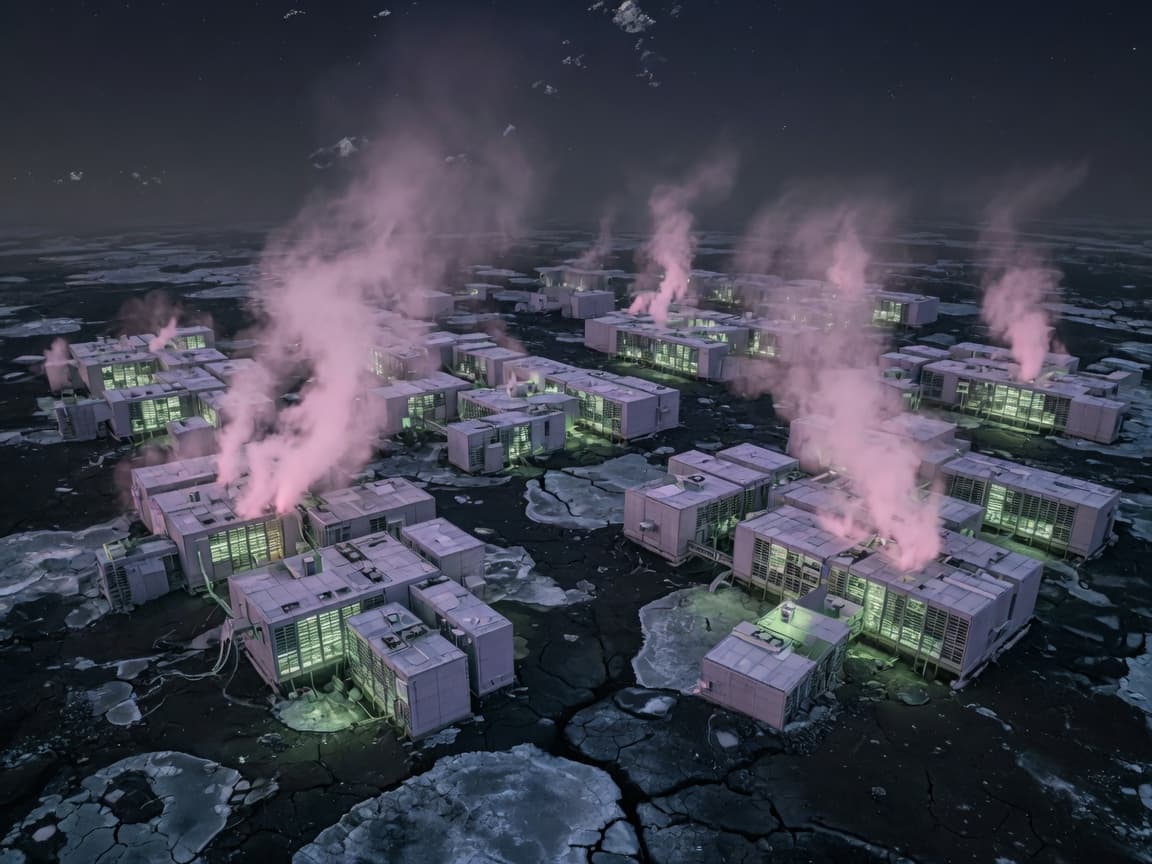
Meta has broken ground on a 1-gigawatt AI data center in Sturgeon County, Alberta — its first major Canadian facility built explicitly for AI workloads. The project carries a projected capital expenditure of CAD$13 billion (approximately $9.17 billion), making it one of the largest single private investments the region has ever seen. It also arrives with a power arrangement that cuts to the core tension every hyperscaler is navigating right now: where does the electricity actually come from?
A Dedicated Gas Plant Is the Tell
The facility won't draw from the provincial grid in any conventional sense. Power will be supplied by a new $4.6 billion natural gas plant developed by Pembina in partnership with Morgan Stanley infrastructure funds — built specifically to serve this campus. That decision — commissioning a bespoke generation asset rather than sourcing existing capacity — says more about the state of AI infrastructure buildout than any press release could. At 1 gigawatt, the load profile demands certainty that spot markets and grid interconnects can't reliably provide. Developers are now treating power generation as part of the data center stack.
For Pembina and Morgan Stanley, the arrangement creates a long-duration anchor tenant for a major capital deployment. For Meta, it trades grid dependency for cost predictability and uptime assurance over a multi-year construction and operations horizon. The tradeoff — locking in gas-fired generation at a moment when carbon commitments are under scrutiny — is a real one. But the build decisions being made today reflect where reliable gigawatt-scale power actually exists.
What the Compute Is For
Meta has been explicit that this isn't generic cloud capacity. Compute earmarked for the Sturgeon County facility is oriented toward training and serving large-scale recommendation and generative models — the workloads that underpin Feed ranking, Reels, and whatever the next generation of assistant and creative tools looks like across its platforms. That specificity matters. This isn't a speculative land-grab; it's a committed infrastructure bet against a defined model-serving roadmap.
The site also complements Meta's existing hyperscale footprint across the US and Europe — adding a northern node with distinct advantages in ambient cooling potential and, now, a purpose-built power supply. Sturgeon County enters the map of global AI infrastructure as a deliberate placement, not an opportunistic one.
The Regional Calculus
Local authorities have framed the data center as one of the largest single private investments in the region's history, with construction and operations employment running across multiple years. That framing is economically accurate — CAD$13 billion in committed capex doesn't land quietly in any jurisdiction. Alberta's energy infrastructure, regulatory environment, and land availability have been factors in this calculation. The province has an established industrial corridor in the region, and the ability to permit and build a $4.6 billion gas plant as part of the same development package is itself a signal about the regulatory surface Meta was working with.
For other operators watching: Canada — and Alberta specifically — is positioning itself as a viable location for hyperscale AI infrastructure that can't wait for renewable buildout to catch up with demand curves.
The Pattern This Establishes
The Sturgeon County project is a data point in a broader restructuring of how large AI infrastructure gets built. The unit of planning is no longer the data center — it's the data center plus its power plant, treated as a single integrated capital project. When Meta, one of the largest technology operators on the planet, finds it necessary to commission a $4.6 billion generation asset to unlock a 1-gigawatt campus, the message to the rest of the industry is clear: grid availability is a hard constraint, and the operators willing to vertically integrate into energy will move faster than those waiting for capacity to materialize. That's the shift Sturgeon County represents — not just a facility, but a template.