
The Pit Wall Goes Agentic: How AI Is Rewriting the Rules of Formula 1
From Claude in the Williams strategy room to Oracle's real-time race agent at Red Bull, 2026 is the year AI stopped advising motorsport and started making calls.
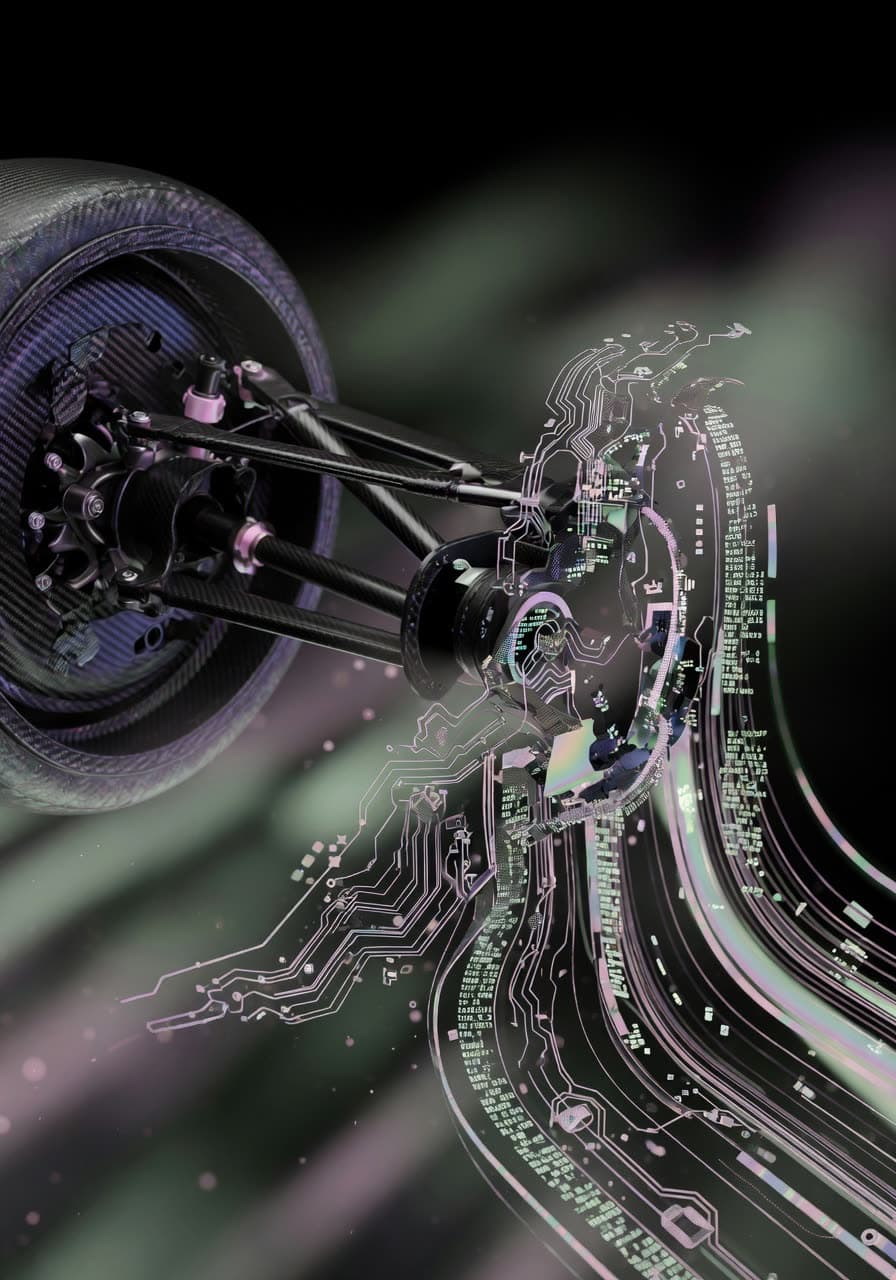
When Max Verstappen's engineers called him in for a tire change at the Miami Grand Prix this spring, the recommendation hadn't come from a human with a stopwatch and a gut feeling. It had surfaced from Oracle's AI Strategy Agent — a system the Red Bull pit wall deployed live for the first time this season — which had processed real-time telemetry, modeled rival undercut windows, and flagged the optimal moment before any human analyst had finished reading the data feed. The call was right. The race outcome followed.
That moment is not an anomaly. It is the defining pattern of Formula 1 in 2026: the sport's most consequential decisions are now being shaped, in real time, by AI agents that can chew through a million data points per second.
Eight Deals in Six Months
The 2026 technical regulation overhaul — new hybrid power units, active aerodynamics, a fully rewritten energy management rulebook — was always going to reshuffle the competitive order. What nobody fully anticipated was that it would also trigger the single largest commercial AI deployment in professional sport's history.
Eight new AI partnerships have been signed across Formula 1 and its eleven teams in the last six months alone. The alignment is almost tribal: Williams runs Anthropic's Claude. McLaren runs Google's Gemini, fed by Dell's portable micro-datacentres parked trackside to update a live digital twin of the car. Red Bull extended its Oracle relationship and debuted the Strategy Agent this season. At the Miami race, Williams' Claude-supported engineers reportedly ran several million race scenarios against live unfolding telemetry during a single safety car period.
The volume these systems have to absorb is staggering. A 2026-spec F1 car carries between 300 and 600 onboard sensors and streams more than a million data points per second back to the team. No human operation center can parse that in anything approaching real time. The AI can — and increasingly does.
"It's gone from a sort of basic AI to more of an agentic approach," Jack Harington of Oracle Red Bull Racing told reporters this spring. "Rather than just searching for something, it's actually providing decisions for us."
Strategy Agents at the Pit Wall
The semantic shift from "AI tool" to "AI agent" is deliberate and consequential. Tools answer questions. Agents take initiative.
Red Bull's Oracle agent doesn't wait to be asked whether to pit. It monitors rival strategy, weather inputs, tire degradation curves, and safety car probability models simultaneously, then surfaces recommendations with time-stamped confidence intervals to the engineers on the pit wall. The humans still make the final call — for now — but the recommendation arrives before the human has formulated the question.
The real competitive advantage in 2026 isn't horsepower. It's inference speed at the decision layer.
McLaren's trackside Gemini stack runs a similar loop, stress-testing its own pit decisions against three counterfactual scenarios in the background of every real one. Williams' Claude integration is reported to be particularly strong on scenario-branching under uncertainty — exactly the kind of work that used to eat two hours of post-race debrief time and now happens in the final 10 laps.
The FIA, for its part, is using AI on its own side of the timing line. Working with sports analytics firm Catapult, the governing body has deployed a computer vision system inside its RaceWatch platform that can detect track-limit violations — cars crossing white lines — without a steward manually reviewing footage. The system reads a car's silhouette, plots its trajectory against reference lines, and flags breaches automatically. It doesn't deliberate. It flags.
Active Aero, Active Intelligence
The car changes are inseparable from the software changes. For the first time in the sport's history, F1 runs full-time active aerodynamics in 2026: front and rear wings adjust their angles dynamically, optimizing for either downforce or low drag based on where the car is on track. Managing that system in real time — harmonizing it with the new energy deployment regime, which lets drivers manually trigger "Boost" mode to attack or defend — generates its own river of telemetry that teams now need to interpret mid-lap.
The energy management rules are genuinely novel. The MGU-H is gone, but the MGU-K has been upgraded from 120 kW to 350 kW of output, meaning nearly half the car's total power is now electrical. An "Overtake Mode" unlocks additional electrical harvest when a car closes to within one second of its target. Optimizing when to trigger it, when to bank energy, and when to sacrifice lap time to set up a pass three corners later is exactly the kind of multi-variable, time-horizon problem that AI agents are unusually good at.
The cars are, in other words, generating more AI-relevant input data than any previous generation — and the teams that can model it fastest are the teams that finish first.
The Parallel Track: Driverless Racing Grows Up
While F1's humans remain firmly behind the wheel, the adjacent world of fully autonomous motorsport has taken a significant step forward. The Abu Dhabi Autonomous Racing League — A2RL, organized by the UAE's Advanced Technology Research Council — ran its first head-to-head Grand Final at Yas Marina Circuit in late 2025, with six fully driverless racecars competing at sustained speeds above 250 km/h. Germany's TUM team won. Two cars ran within one second of each other for extended periods, which would have seemed implausible to anyone who watched the chaotic early Roborace experiments half a decade ago.
For 2026, A2RL evolved the format: less pure speed, more technical complexity. Teams now face dynamic track obstacles and mission-style tasks designed to stress perception systems and adaptive planning — a deliberate push toward the same kind of reactive, agentic decision-making that's colonizing the F1 pit wall. A drone championship variant, run in January at UMEX, drew fourteen international teams.
The gap between AI-assisted racing and AI-driven racing is narrowing faster than the sport expected.
What Comes After the Strategist
The natural next question — the one teams aren't quite saying out loud yet — is where the human ceases to be the bottleneck. Right now, AI agents recommend. Engineers decide. But the latency difference between a human processing a recommendation and an AI executing it directly is measurable, and it compounds over a 70-lap race.
Satya Nadella's framing of outcome-based AI pricing as a "royalty" model has a clean motorsport parallel: if Oracle's agent demonstrably wins Red Bull a race it would otherwise have lost, what is that worth in contract terms? The answer, almost certainly, is more than any conventional data licensing deal. F1 is about to find out.
The 2026 season is still running. The championship is unsettled. But one thing is already clear: the sport that spent a century optimizing the car has spent this year optimizing the mind behind it — and the mind is increasingly artificial.
The lap times are already showing it.