
Tether Put a Crypto Wallet Inside Europe's Top Humanoid
Neura Robotics raised up to $1.4B at a $7B valuation — the largest round a full-stack robotics company has ever taken — and the lead investor is a stablecoin issuer embedding payment rails and edge AI directly into the robots.
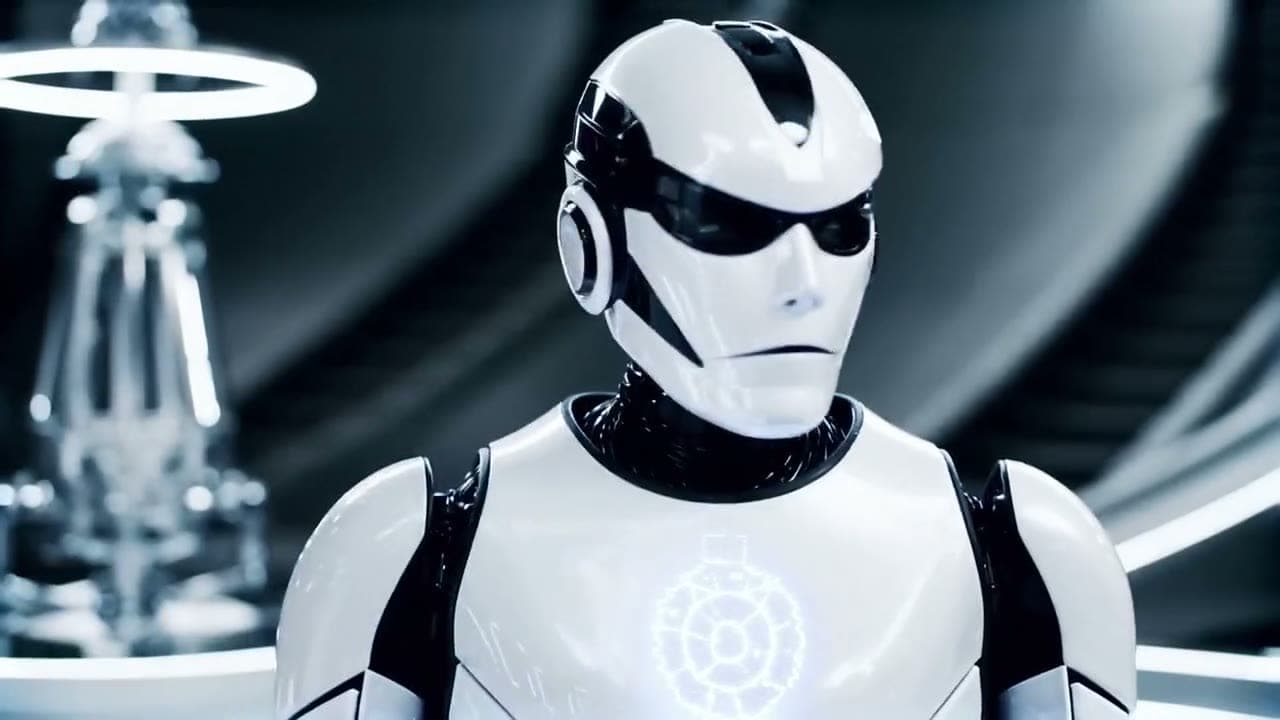
The headline number is the kind that resets a category: Neura Robotics, the German humanoid maker out of Metzingen, announced a Series C of up to $1.4 billion at roughly a $7 billion valuation — the largest funding round a full-stack robotics company has ever raised. That alone would make it the European answer to Figure and Tesla's Optimus, finally capitalized at a scale that matches the ambition. But the part worth slowing down on isn't the size of the check. It's who wrote the first one.
The lead investor is Tether — the stablecoin issuer behind USDT, a company most people associate with crypto plumbing, not robot factories. Alongside it sit the names you'd expect in a 2026 physical-AI mega-round: Nvidia, Amazon, Qualcomm, plus European industrial heavyweights Bosch and Schaeffler, and the European Investment Bank. The strategic logic of the chipmaker and the e-commerce giant backing humanoids is obvious. The stablecoin issuer leading the round is the detail that tells you where this is actually going.
What Tether is actually buying
Tether isn't a passive checkbook here. As part of the deal, it's integrating two of its own technologies directly into Neura's stack. The first is a Wallet Development Kit that embeds payment functionality into the robot itself — so a machine on a factory floor or in a home can hold value and transact natively, without routing through a human's account. The second is QVAC, Tether's edge-AI runtime, which lets models run locally on the device rather than calling out to the cloud.
Put those two together and the thesis comes into focus. A humanoid that can both think on-device and pay on-device is no longer just a tool you operate — it's an economic agent with hands. It can buy its own consumables, settle for the energy it draws, or pay another machine for a task, and it can do the reasoning to decide when to do so without a round trip to a data center. This is the same agentic-commerce idea that's been circling software agents all year — Mastercard's Agent Pay, Coinbase's x402 — except Tether is wiring it into something with actuators and a 100-kilogram lift.
That's why the crypto money makes sense. Stablecoins are the obvious settlement layer for machine-to-machine payments: instant, programmable, jurisdiction-agnostic, and built for volumes and granularities that card interchange was never designed to handle. Tether is placing a bet that the first real mass market for stablecoin transactions might not be humans at all. It might be robots paying robots.
The robot underneath the round
Neura isn't a science project chasing a demo reel. Its flagship, the 4NE1, is a cognitive humanoid that stands at human height with 55 degrees of freedom, 360-degree perception, artificial skin for tactile sensing, a 100-kilogram payload, and six-to-eight hours of runtime on hot-swappable batteries. The Gen 3 industrial design was done with Studio F.A. Porsche, the house behind the 911 — a signal that Neura intends these to be products people buy by the thousand, not lab curiosities. Pricing for the next generation has been quoted around €98,000 for small orders, dropping toward €60,000 at volume.
The brain is a stack-of-stacks: Nvidia's Isaac GR00T foundation model for humanoid reasoning, fused with Neura's proprietary AURA system. And the part that makes the company's flywheel argument credible is the Neuraverse — a shared operating layer where, when one Neura robot masters a task, that skill becomes instantly available to every other robot on the network. It's an app-store-meets-fleet-learning model: developers and companies will be able to publish, share, and eventually monetize robotic skills. The funding is earmarked to scale that — manufacturing toward several million robots by 2030, more training environments, and a wider Neuraverse.
The pipeline isn't vapor either. Neura says existing orders and strategic deployments already exceed $1 billion, which is the kind of demand signal that turns a milestone-tied funding ceiling into a fundable plan. Because that's the fine print worth flagging: the $1.4 billion is an upper bound tied to performance milestones, not a single wire transfer. It's a ceiling, and Neura has to hit marks to draw it down.
Why Europe needed this
The humanoid race has, until now, read as a two-country story: American startups and Chinese mass manufacturers, with everyone else watching. Neura's round is the first time a European company has been capitalized at a level that lets it compete on manufacturing scale rather than just engineering taste. Backing from Bosch, Schaeffler, and the EIB makes the geopolitical subtext explicit — this is also Europe deciding it doesn't want to import its entire robot workforce from Hangzhou or Fremont.
The Nvidia and Amazon money tells you the supply and demand sides both believe it. Nvidia wants Isaac GR00T to be the Android of humanoids and needs flagship hardware partners outside the US and China to prove the platform is universal. Amazon, which just crossed a million robots in its own warehouses, has every reason to fund a second source of humanoid labor it doesn't have to build itself.
The real story
Strip away the record-setting number and what's left is a structural claim about the next decade: that the robot and the rail will be born together. For a year, agentic payments and physical AI have advanced on separate tracks — one camp teaching software to pay, the other teaching machines to move. Neura's round is the first big check that treats them as the same problem. The lead investor isn't a robotics fund or a strategic chipmaker. It's the company that prints the dollars these machines might one day spend. When the money that settles machine commerce decides to underwrite the machines themselves, the two tracks have officially merged — and the most valuable robotics round in history is the proof.