
The Tug Boats of Orbit Just Got a $4.3 Billion Bet
While the rest of tech chases autonomous agents and humanoid robots, the hottest new-space startups are quietly winning by building the unglamorous plumbing of orbit — and hiring humans to do it.
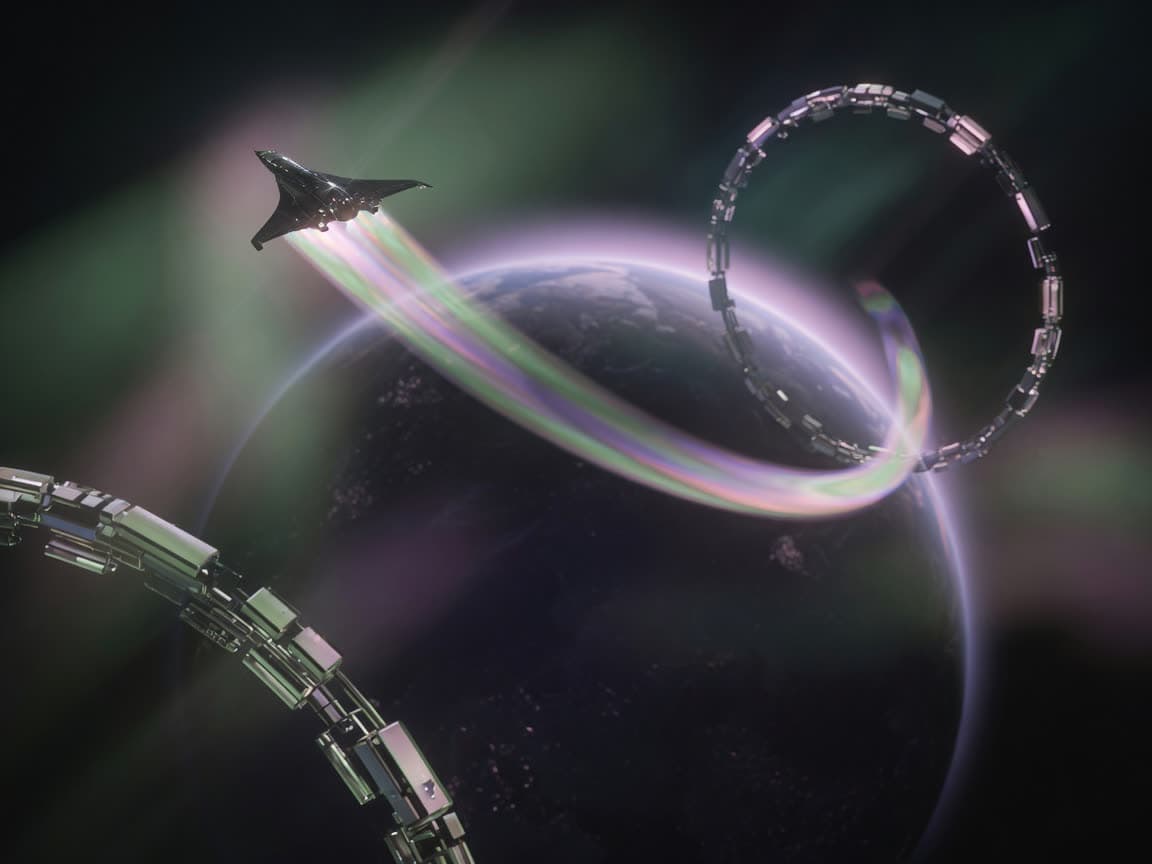
On June 2, Impulse Space closed a $500 million Series D at a $4.26 billion valuation. The company, run by former SpaceX propulsion lead Tom Mueller, has now raised more than a billion dollars total — a $300 million Series C just a year ago, and now this. What does Impulse build? Not rockets. Not a constellation. It builds the equivalent of harbor tug boats: small, fiercely maneuverable spacecraft that grab a satellite after a rocket drops it off in the wrong orbit and haul it to where it actually needs to be.
For years that was a footnote in the space economy. Now it's the main event. And the most telling detail of the round wasn't the valuation — it was Mueller's framing of what the money is for. As TechCrunch put it bluntly, Impulse raised half a billion dollars "to hire people, not AI." In a year where every pitch deck on Sand Hill Road promises to replace headcount with agents, a hardware company just got rewarded for promising the opposite.
The unglamorous layer is where the money went
Step back and the pattern is unmistakable. The new-space winners of 2026 aren't selling the romance of Mars or the spectacle of a launch. They're selling infrastructure — the last-mile logistics of orbit. Impulse's Mira tug has already flown three times on Falcon 9 rideshares; its high-energy Helios kick stage is built to move a heavy payload from low Earth orbit to geostationary in eight hours, a trip that used to mean months of slow spiraling or a dedicated rocket. That's not a science project. That's a freight company.
The same logic is minting fortunes in manufacturing. Apex, the Los Angeles satellite-bus startup, has raised $200 million tranches the way other companies raise seed rounds, and its Factory One is pushing toward a six-figure square footage and a roughly 50 percent production bump in 2026 — turning satellite buses into a productized, off-the-shelf catalog item rather than bespoke craftsmanship. Observable Space just took $90 million in its debut round to build laser links that move data between satellites — and, eventually, orbiting data centers. Every one of these companies is selling a pipe, a platform, or a parking spot. None of them is selling a moonshot.
Defense is the customer that changed the math
The reason this layer suddenly pencils out is the same reason defense-tech funding has already blown past $14.6 billion this year — past the entire 2025 record with half the calendar left. In December the Space Development Agency handed roughly $3.5 billion to four companies for 72 missile-tracking satellites. The proposed Golden Dome architecture implies hundreds more. When the Pentagon decides it needs to populate orbit at industrial scale, the bottleneck stops being the rocket and becomes everything downstream: who builds the buses, who moves them, who tracks them, who, in the case of seed-stage Wardstone, builds an interceptor that physically kills a hypersonic missile from orbit. The tug boat and the bus factory are no longer side businesses. They are the war effort's supply chain.
Here's the contrarian read, and it's worth holding onto. The dominant tech narrative of 2026 says the leverage is in software that thinks — AI agents finally moving from chat to action, an on-chain agent economy settling transactions in crypto, humanoid robots walking off the demo stage, Nvidia's compute monopoly compounding with every quarter. New space is the loud rebuttal to all of it. You cannot prompt a satellite into geostationary orbit. You cannot fine-tune a propellant tank. The constraint here is brutally physical — mass, delta-v, propellant, the cost of a kilogram lifted off the planet — and no amount of generative video or agentic orchestration relaxes it. Impulse's "hire people, not AI" line wasn't a luddite flex. It was an honest statement about where the binding constraint actually lives: in the people who can weld a thruster that won't fail in vacuum.
That doesn't mean software loses. The smart money is betting on the seam — autonomy that lets a tug rendezvous and dock without a ground crew babysitting every burn, manufacturing software that lets Apex treat satellites like SKUs, the AI layer that turns a missile-tracking constellation into a real-time picture. But the value is accruing to whoever owns the atoms. The agent economy can move bits at the speed of light and still hit a wall the moment something has to physically be somewhere it isn't. Orbit is the purest version of that wall, and right now it's the most expensive real estate in the solar system.
So watch the tug boats. When the flashiest money in venture is flowing not to a chatbot but to a company that hauls hardware between orbits and brags about hiring welders, the market is telling you something the hype cycle keeps trying to drown out: in space, the moat is still made of metal.