
Nvidia's Moat in 2026: Wider Than the Bears Think, Narrower Than the Bulls Hope
Blackwell sold out before it shipped and CUDA still owns the developer. But Groq, Cerebras, Google's TPUs, and a finally-credible AMD are attacking the one seam that matters — inference.
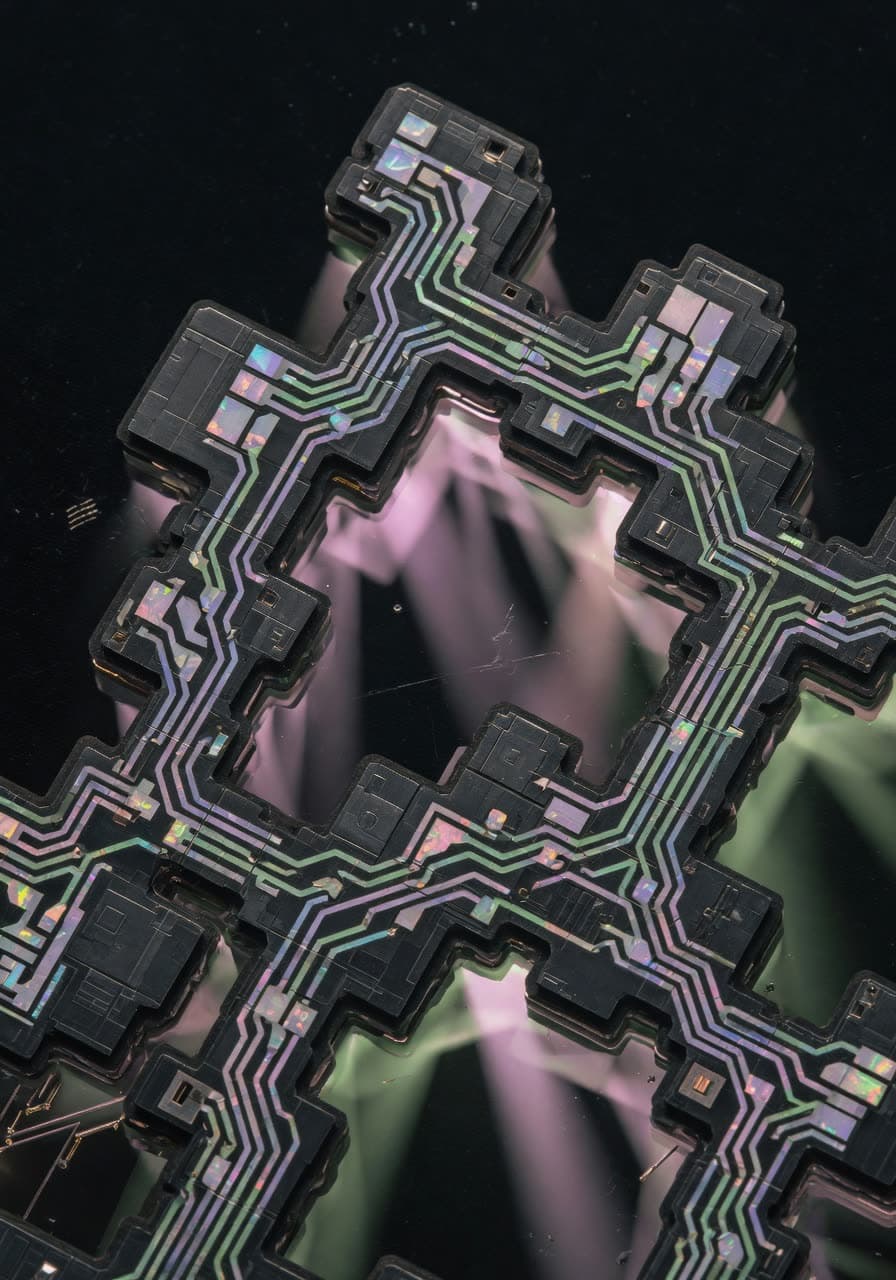
Every year for the past three, a confident cohort has declared Nvidia's moat about to crack — and every year Jensen Huang has walked onstage with a chip the entire industry had already pre-ordered. Blackwell, and the B200/GB200 systems built around it, sold out into 2026 before meaningful volume shipped, with hyperscalers committing capital on a scale that reads more like nation-state infrastructure than corporate capex. The moat is real, it is wide, and it is not made of silicon. It's made of CUDA, a sixteen-year head start in software, and a supply chain nobody else can replicate at volume. But for the first time, there's a seam in it worth watching — and it's called inference.
The moat was never the chip
People who think Nvidia's advantage is raw GPU performance are looking at the wrong layer. Competitors can match or beat Nvidia on specific silicon metrics — they have for years. What they cannot match is CUDA: the software stack, the libraries, the kernels, the years of accumulated optimization, and most of all the millions of developers who already know it and the entire AI codebase that assumes it.
Every major framework, every reference implementation, every fine-tuning recipe is written CUDA-first. Porting to anything else is a tax — sometimes a small one, sometimes a project-killing one — and that tax is the moat. Nvidia spent sixteen years making CUDA the default substrate of machine learning, and you don't unwind a default by being 20% faster on a spec sheet.
Hardware advantages are temporary. A developer ecosystem that assumes your platform is the floor is the kind of moat that compounds.
The second pillar is supply chain. Nvidia's command over advanced packaging (CoWoS), high-bandwidth memory allocation, and TSMC's leading-edge capacity means that even a competitor with a great chip faces a wall when trying to manufacture at volume. Owning the design isn't enough. You have to make millions of them, and the bottleneck nodes are largely spoken for.
The challengers are real this time — and they're aiming at inference
Here's what changed: the AI workload is bifurcating. Training — the brutal, capital-intensive, software-flexible phase — remains Nvidia's fortress. But inference, the act of actually running models in production, is becoming the larger market by volume, and it has different economics. Inference rewards latency, throughput-per-dollar, and power efficiency over raw flexibility. That's the seam.
Groq built an architecture (its LPU) explicitly for inference speed, and the token-throughput numbers it posts on open models are genuinely startling — fast enough to change what real-time AI products feel like. Cerebras, with its wafer-scale engine, attacks from the opposite direction: enormous single-chip systems that sidestep the interconnect overhead that dogs GPU clusters, posting inference speeds that embarrass conventional setups on the right workloads.
Then there are the hyperscalers, who represent the most serious structural threat precisely because they're also Nvidia's biggest customers. Google's TPUs are the most mature in-house alternative — Gemini trains and serves on them, proving you can run a frontier lab without buying Nvidia at all. Amazon's Trainium and Inferentia and Microsoft's Maia are the same play: vertically integrate, escape the Nvidia margin, control your own destiny. They'll keep buying Blackwell because demand outstrips everything, but every internal chip is a hedge against the 75% gross margins Nvidia is currently charging them.
And AMD is, finally, credible. The MI300 line and its successors closed enough of the hardware gap that the bottleneck is now squarely software — ROCm versus CUDA. AMD knows it, and the entire competitive industry is quietly funding the open-software counterweight (Triton, and the broader push to write models in a hardware-agnostic layer above CUDA) because a viable CUDA alternative is worth more to them collectively than any single chip.
Does the moat hold?
Partially — and the split matters. On training, the moat holds firmly through 2026 and likely beyond. The combination of CUDA, NVLink interconnect at cluster scale, and supply-chain lock means whoever is pushing the frontier is, with the singular exception of Google, doing it on Nvidia. That business is not contestable in the near term.
On inference, the moat is genuinely under pressure. It's a more fragmented, more price-sensitive, more workload-specific market, and it's exactly the kind of market where a specialized chip with a narrow software surface can win a slice without needing to replicate all of CUDA. Groq doesn't have to beat Nvidia at everything — it just has to be the obvious choice for fast token serving on popular open models. That's a winnable fight, and it's a fight over the part of the market that's growing fastest.
The strongest bear case isn't a competitor's chip at all. It's margin compression. Nvidia's extraordinary profitability is itself the prize that has mobilized every hyperscaler, every challenger, and every venture dollar in custom silicon against it. You don't sustain 70%-plus gross margins in a market this large without the entire industry treating your margin as their opportunity. The moat may hold while the price you can charge for crossing it slowly erodes.
The read
Nvidia in 2026 looks less like a company about to be disrupted and more like Intel at its peak — utterly dominant, structurally entrenched, and quietly accumulating the exact conditions that eventually let challengers in. The difference is that Jensen Huang appears to have read that history. The relentless cadence, the move up the stack into full systems and networking (the Mellanox bet looking prescient), the software investment that keeps CUDA ahead of every open alternative — it's the playbook of an incumbent who knows the moat is a treadmill, not a wall.
The honest answer to "does the moat hold" is: yes, for training; under real pressure, for inference; and on a clock everywhere, because the margins are too good for the rest of the industry to leave alone. The bears who keep calling the top have been wrong for three years running. They'll probably be wrong about the timing again. But the seam they're pointing at is finally real — and it's widening one inference workload at a time.
— Flux Desk