
Nvidia Paid $5B to Move Sutskever Off Google's TPUs
Safe Superintelligence has no product, no papers, and no revenue — and Nvidia just made one of its largest AI investments ever to get it onto Vera Rubin instead of Google silicon.
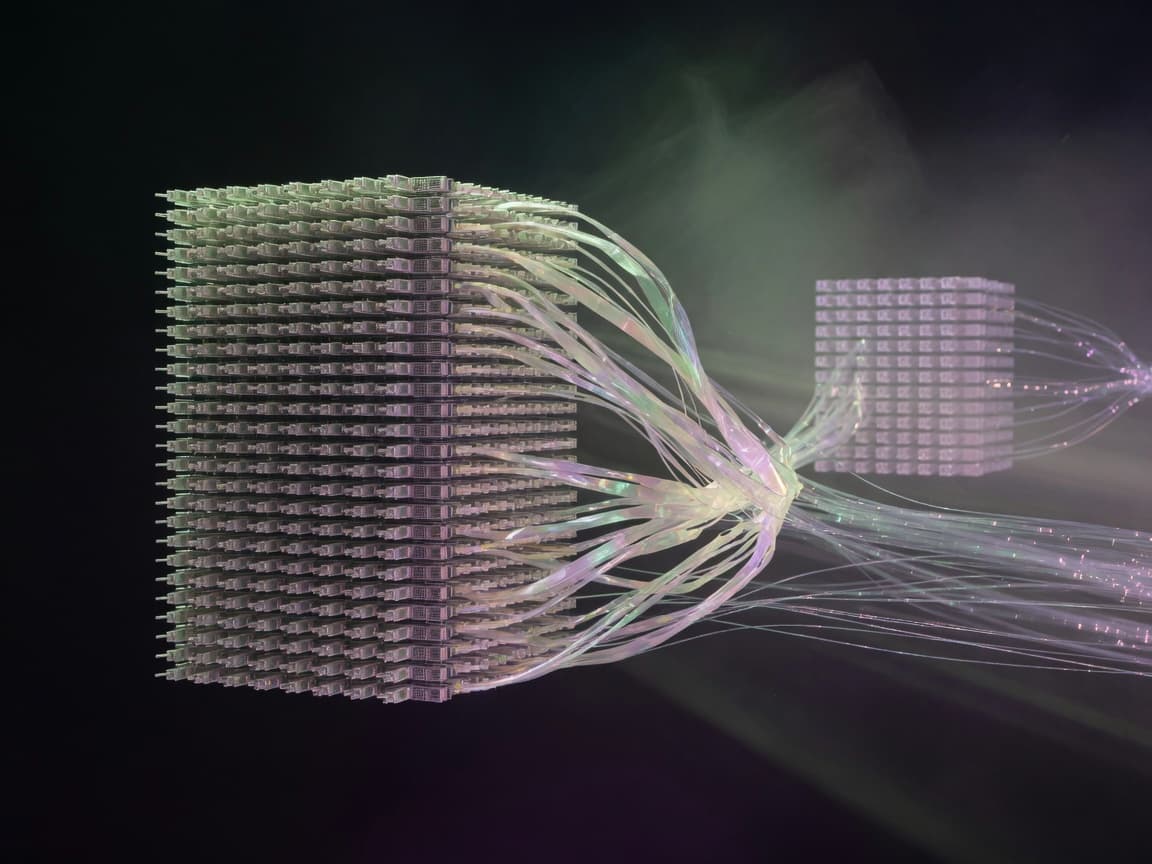
Nvidia is investing $5 billion in Safe Superintelligence, the lab Ilya Sutskever founded after leaving OpenAI in 2024. The deal, announced July 27, is structured as a long-term strategic partnership that gives SSI access to Vera Rubin systems and will raise its compute capacity tenfold over the next 12 months.
SSI has published no papers, shipped no product, and disclosed nothing about its research direction in two years. It has roughly 50 employees and a $32 billion valuation. It has never reported revenue.
That combination is doing a lot of work in the headlines. It's the wrong thing to focus on.
The line buried in the coverage
SSI ran on Google TPUs.
That is the fact that explains the check. Sutskever's lab — the highest-prestige pure research shop in the industry, the one every frontier researcher takes a meeting with — had built its training stack on the one serious alternative to Nvidia silicon. And Google, which has spent two years converting TPU capacity into a genuine competitive wedge against CUDA, had it.
Nvidia paid $5 billion to change that.
Read the deal that way and the "no product, no revenue" framing inverts. Nvidia is not underwriting a bet on SSI's research. It is buying a defection from the only credible rival architecture, at the single most reputationally leveraged customer available. Whatever SSI eventually builds will be built in CUDA, trained on Rubin, and described in whatever it publishes as such. Every researcher SSI recruits — and recruiting is most of what SSI does publicly — will train on Nvidia hardware.
Analysts described the structure plainly: a compute-supply agreement wrapped in strategic equity. The equity is the wrapper. The supply is the point.
What tenfold in twelve months actually means
SSI's compute goes up an order of magnitude inside a year, on the next-generation platform, starting from a base large enough to have raised $2 billion at $32 billion in April 2025 and roughly $7 billion in total since.
An order of magnitude is not an optimization. It is a change in what kind of experiment is runnable. Labs at the frontier are compute-bound in a specific way: the question is not whether you can serve inference but whether you can afford the failed training runs that precede a working one. A 10× budget is a 10× tolerance for being wrong, which is the actual currency of frontier research.
It also imposes a clock. Compute at that scale has an opportunity cost measured in billions, and Nvidia's patience is not unlimited — it is an investor now, with a position to mark. Two years of publishing nothing was a defensible posture for a lab spending its own seed money. It is a different posture for a lab consuming a tenth of a Rubin buildout.
Nvidia's real balance sheet problem
Nvidia has made a run of these: an ecosystem of investments in the companies that buy its chips, funded by the margins from selling them chips. OpenAI, xAI, Anthropic's neighbors in the infrastructure stack, and now SSI. The pattern has a name in every skeptic's note — vendor financing — and the criticism is not baseless.
But the SSI deal is a cleaner case than most, because SSI wasn't a customer. Nvidia isn't recycling revenue from an existing buyer to book more revenue from the same buyer. It is paying to convert a non-customer that had chosen someone else's silicon. That's a competitive acquisition, not circular accounting.
The strategic logic is also legible in what Nvidia gets that isn't equity. Frontier labs are where kernels get written, where architectures get co-designed, where the next generation's software assumptions are formed. Google's TPU advantage has never been raw FLOPs — it's that JAX and the TPU stack are genuinely good and that the people who use them tell other people. Every serious lab that stays on TPUs compounds that. SSI leaving is a data point Nvidia can sell to the next twenty.
What to watch
Whether SSI publishes anything. Two years of silence with private money is discipline. Continued silence with a strategic investor on the cap table starts to read as a company with nothing to show. The first technical disclosure — whenever it comes — will be the first real evidence about whether the $32 billion was priced on research or on Sutskever's name.
Whether Google responds in kind. If TPU access becomes something Google pays labs to accept rather than something labs pay Google for, the alternative-silicon economics get much worse, and quickly. Watch for a counter-deal.
Whether "safe superintelligence" survives the compute. SSI's founding pitch was that it would not ship intermediate products, would not chase revenue, and would work on one thing. A tenfold compute increase from a public-market investor with quarterly reporting obligations is exactly the pressure that pitch was designed to resist. Something has to give, and the honest answer is that nobody outside the building knows which.
The read
The market is treating this as Nvidia paying $5 billion for a company with nothing to sell. It's closer to Nvidia paying $5 billion for a company to stop buying from Google.
That's a rational price for what it buys — the last independent frontier lab on rival silicon, moved, plus the recruiting-funnel and mindshare effects that follow. It is also an admission. You do not pay this much to move one 50-person lab unless the thing you are defending against is real.
The TPU is real. That's the actual news.