
Perseverance Drives Itself: NASA's Rover Completes Its First AI-Planned Mars Traverse
For the first time, Perseverance navigated Mars using routes designed entirely by onboard AI — a quiet but consequential shift in how humanity operates machines at planetary distances.
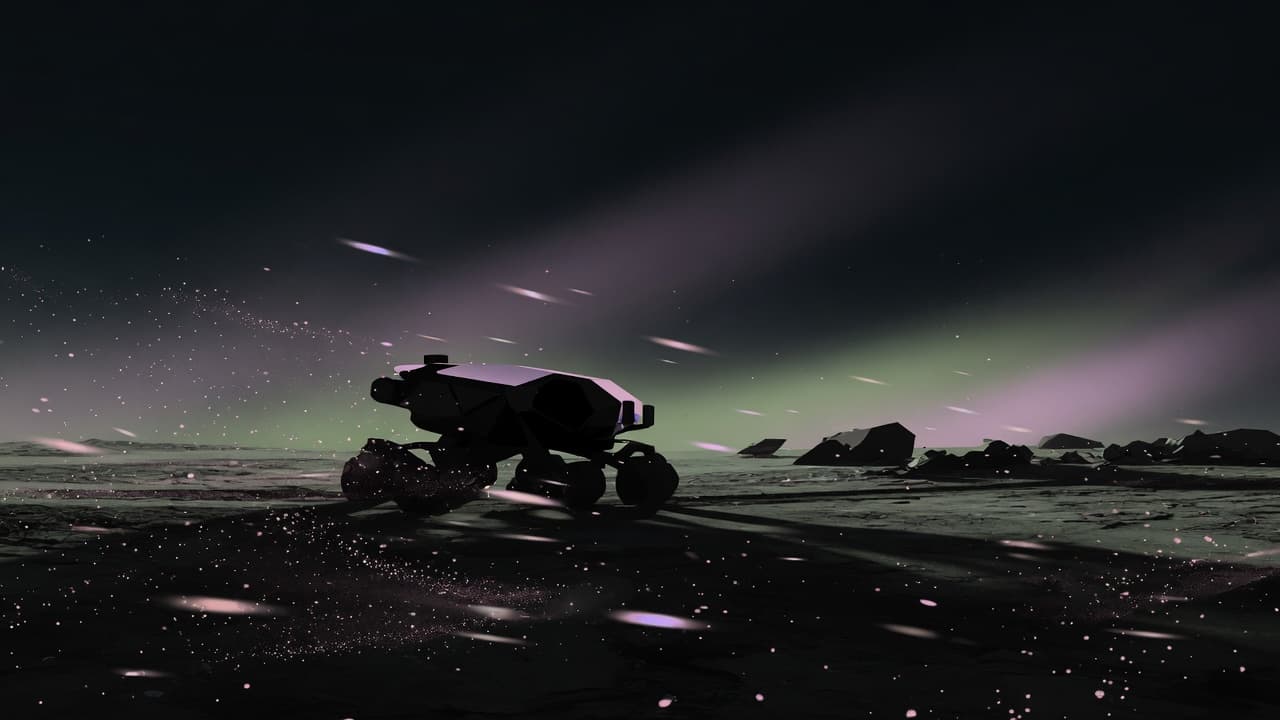
The command to drive didn't come from a room of engineers in Pasadena. It came from the rover itself.
NASA's Perseverance Mars rover has completed a traverse planned entirely by artificial intelligence — the first time in the mission's history that a drive has been executed without human operators designing the route. The milestone is less about a single drive and more about what it rewires: the fundamental relationship between human planners and machines operating tens of millions of miles away.
What Changed — and What Didn't
Perseverance is not new to autonomous movement. The rover has carried onboard hazard-avoidance systems since landing, capable of halting or adjusting in response to immediate terrain obstacles. What changed here is the level of the decision-making.
The new system uses machine learning — not the rule-based algorithms that governed earlier autonomy — to analyze terrain imagery and independently determine routes that are both safe and efficient. That distinction matters. Rule-based systems respond to conditions they were explicitly programmed to handle. Machine learning-based navigation generalizes: it evaluates terrain in ways its designers didn't have to anticipate case by case. The rover is now reasoning about the ground beneath it, not just reacting to it.
The result is a system that can reduce dependence on ground-based planning — the labor-intensive, time-consuming process by which human operators study imagery, map routes, and uplink instructions across a communication delay that makes real-time control physically impossible.
Why the Communication Gap Makes This Critical
The tyranny of light-speed delay is the defining operational constraint of deep-space robotics. Instructions sent to Mars can take anywhere from three to twenty-two minutes to arrive, depending on orbital geometry — meaning a rover that encounters unexpected terrain can't call home for guidance. It has to handle it, or stop and wait.
That waiting has real costs. Every sol spent parked while engineers on Earth deliberate over imagery is scientific ground not covered, a sample site not reached, a geological feature examined one day later. The practical deployment of AI-driven routing in this environment — harsh, communication-delayed, unforgiving of errors — demonstrates that the system is functional where it actually needs to work, not just in simulation.
NASA frames the successful traverse as exactly that: a proof of practical deployment, not a laboratory result. The rover assessed terrain, planned a path, and executed it. The humans found out after the fact.
The Throughput Argument
The operational logic behind this shift is straightforward: speed up scientific exploration by removing the human planning bottleneck from routine navigation decisions.
When a rover can autonomously identify and route toward scientifically interesting targets — outcrops, sedimentary layers, mineral deposits — the mission accumulates data faster. Ground teams can redirect their attention from route geometry to higher-order science questions. Targets that were previously slower or riskier to reach through manual route design become accessible. The rover, in effect, becomes a more capable field geologist — one that doesn't need to radio home before taking the next step.
This isn't autonomy for its own sake. It's autonomy as a multiplier on the science return of a mission that already cost substantial resources to land on another planet.
A Test Bed for What Comes Next
NASA is explicit that Perseverance's AI navigation is designed to function as a test bed for future robotic missions — those that will need to operate with minimal human oversight in environments even more complex and remote than Jezero Crater.
The implications extend beyond Mars. Any robotic mission to the outer solar system, to an asteroid, or eventually to another star system faces the same core problem at greater extremes: the physics of communication delay means the machine must be capable of making consequential decisions on its own. What Perseverance just demonstrated is that machine learning-based route planning can function reliably under those constraints in a real operational environment.
The bigger shift here isn't a rover choosing a path across a Martian plain. It's the confirmation that autonomous decision-making — real decision-making, not scripted responses — is ready to be a standard feature of how humanity explores space. The age of rovers that wait for instructions is ending. The age of rovers that think is beginning.