
The Robotaxi Reckoning: Waymo Scales, Tesla Stumbles, and China Floods the Zone
The autonomous ride-hail industry has passed its proof-of-concept phase — now the gap between operators who can actually run fleets and those still promising to is becoming impossible to ignore.
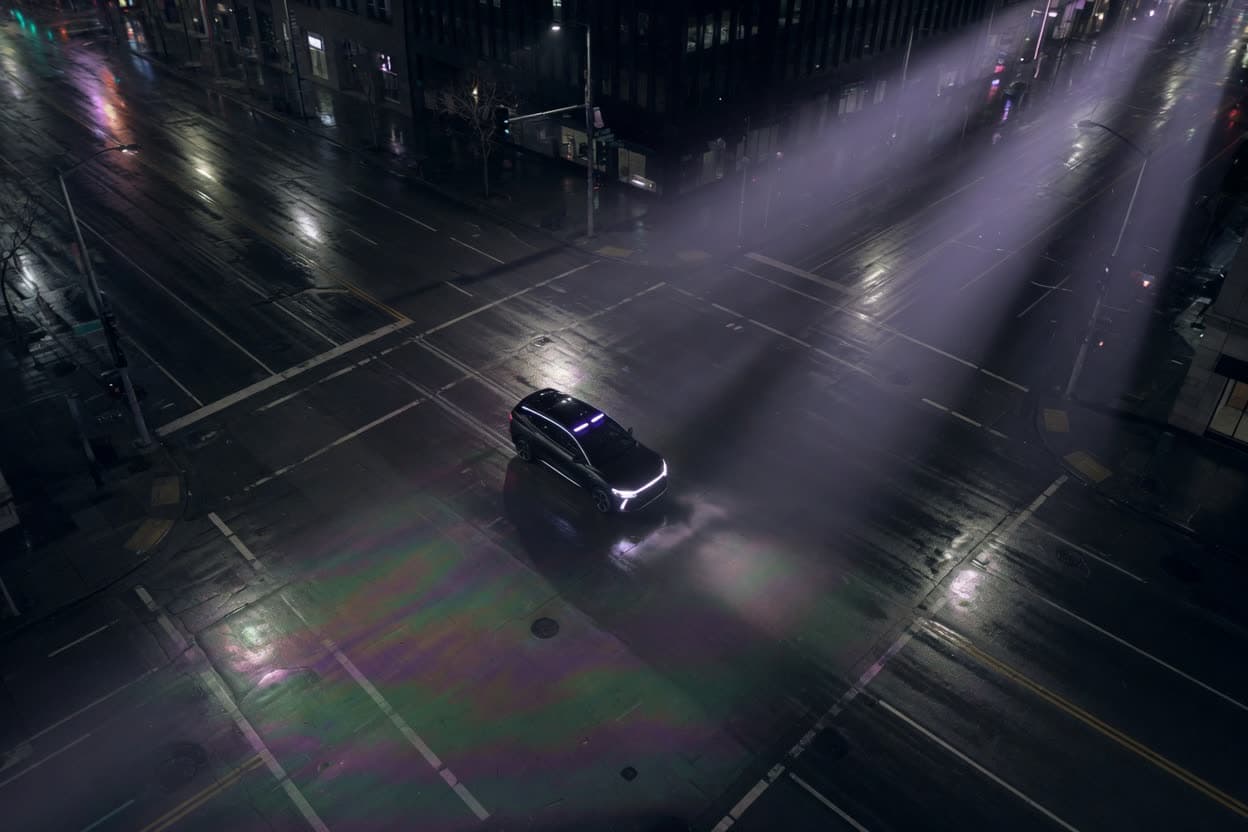
The robotaxi has arrived. Not in the messianic, civilization-reshaping way the press releases promised for a decade, but in the grindingly real way that any capital-intensive infrastructure business actually arrives: incrementally, expensively, and with a leaderboard that is suddenly very hard to dispute.
Waymo completed roughly 450,000 paid rides in a single week earlier this year. The company — still an Alphabet subsidiary, still burning capital at a rate that would frighten a normal CFO — has been valued at $126 billion post-money and operates active commercial fleets across Phoenix, San Francisco, Los Angeles, and Austin. Its Texas DMV filings put 577 authorized vehicles in-state. That is not a pilot. That is a business.
Tesla's Austin robotaxi fleet, by comparison, registered 42 vehicles with the state — less than one-tenth Waymo's Texas count, as CNBC first reported in May.
The Fleet Gap Is a Moat
In capital-intensive markets, scale is the product. The gap between Waymo and everyone else is not primarily technological at this point; it is operational. Running a driverless fleet at commercial density requires a supply chain of cleaned, mapped, maintained vehicles, a 24/7 support and tele-operations stack, and a feedback loop between edge-case incidents and retraining cycles that compounds over millions of miles. Waymo has been building that loop since 2018 in Phoenix.
"Robotaxi has reached a tipping point," Baidu's leadership told CNBC last November — and while that framing carries the usual incumbent defensiveness, the data supports a version of it. Baidu's Apollo Go now covers a 3,000 km² zone in Wuhan, including highway segments up to 80 km/h, serving a catchment area of 7.7 million residents. WeRide reported Q1 2026 robotaxi revenue of $16.5 million — up 57.6% year over year — and operates a global fleet approaching 1,300 vehicles. Pony.ai is expanding into the Middle East. The Chinese players move fast because they operate in cities that are actively building V2X infrastructure alongside the fleet, treating autonomous vehicles as urban infrastructure rather than a startup experiment.
Tesla's Austin Stumbles
Tesla launched unsupervised Robotaxi service in Austin in June 2026, and the early returns have been rocky in the way that matters for headlines. Incidents logged in the first weeks included collisions with fixed objects, trees, poles, a bus, and trucks. The company's social channels confirmed the geofenced Austin metro was open to riders — but the five additional cities that had been on the launch roadmap quietly shifted from promised timelines to "preparations underway," a phrase that means nothing and signals everything.
This is not necessarily fatal. Every fleet operator has had the same ugly incident reports in early commercial deployment; Waymo's early San Francisco phase generated its own tabloid coverage. What makes Tesla's position uncomfortable is the combination of a thin fleet, a safety record under scrutiny, and no federal backstop — the SELF DRIVE Act of 2026, the first proposed U.S. national autonomous vehicle statute, is still a draft House bill that has not cleared committee. Without it, every city and state remains its own regulatory negotiation.
The absence of federal AV law is now the industry's single largest structural risk. Every ride Waymo, Tesla, or WeRide completes in the U.S. happens in a regulatory vacuum that a single state legislature or a bad incident cycle can collapse overnight.
The China Problem No One Wants to Frame Correctly
China stopped issuing new robotaxi licenses in late spring after a software glitch caused a series of incidents with Apollo Go vehicles — but this was a pause, not a reversal. The licensing moratorium was city-level, not national, and the country's approach to AV deployment — government-subsidized infrastructure, zoning mandates that force AV-compatible lane design — is structurally more favorable to scale than the U.S. patchwork.
The competitive implication is not subtle: if Chinese operators can commercialize at lower per-mile cost (they can — labor economics, subsidized manufacturing, and shorter hardware iteration cycles all favor it) while U.S. operators remain locked in city-by-city regulatory negotiation, the global robotaxi market does not look like a winner-take-all American success story. It looks like Waymo and Tesla compete in premium Western markets while Baidu and WeRide own volume everywhere else. Market research from Electronics Weekly pegs the global robotaxi market at $168 billion by 2035. The question is where on that map U.S. operators will still have pricing power.
The Real 2026 Milestone: Outcome-Based Pricing
There is a quieter structural shift happening underneath the fleet headlines that deserves attention. Waymo charges per ride. Tesla has signaled that Robotaxi fares will run through its app with dynamic pricing. Neither model is novel. What is novel is that for the first time, you can now benchmark autonomous transportation purely on outcomes — cost per mile, rides per vehicle per day, safety events per hundred thousand miles — without the theoretical caveat of "but the driver cost hasn't been removed yet."
Satya Nadella has been talking about outcome-based pricing as the next AI monetization paradigm, framing it as a royalty on value delivered rather than a subscription. Robotaxis are the purest incarnation of that logic in physical infrastructure: you pay for the trip, not the software license, not the driver's hourly wage, not the vehicle depreciation table. The fleet operator who can deliver the lowest-cost, most-reliable trip wins, full stop.
That framing clarifies the real competition: it is not Tesla vs. Waymo. It is U.S. operators vs. Chinese operators vs. the regulatory environments that either enable or throttle their unit economics.
Who Wins From Here
Waymo's lead is real, but it is not unassailable. The company still requires enormous capital to expand, its mapping requirements are labor-intensive, and it has not demonstrated profitability in any market. Tesla's bet is hardware-first: use the existing Model 3 and Y fleet, train on consumer FSD miles, and flip the switch at scale. That bet could still pay off — Tesla's manufacturing cost basis is lower than any competitor's, and if FSD training generalizes, fleet size compounds faster than anyone else can match.
The scenario most people are not pricing correctly is the regulatory unlock. One federal AV framework — even a minimal one — removes the city-by-city moat and turns this into a national network economics game. Whoever has the most vehicles on the day that law passes wins the following twelve months of expansion capacity.
That law is currently a draft. Watch the committee calendar in Q3. The robotaxi industry's next phase will be legislated before it is engineered.