
Robots Just Out-Raised the Hype: $55.8B Into Physical AI
Robotics companies pulled in $55.8 billion by midyear 2026 — nearly double the prior full-year record — as vision-language-action models turned robot brains into software platforms investors will pay software multiples for.
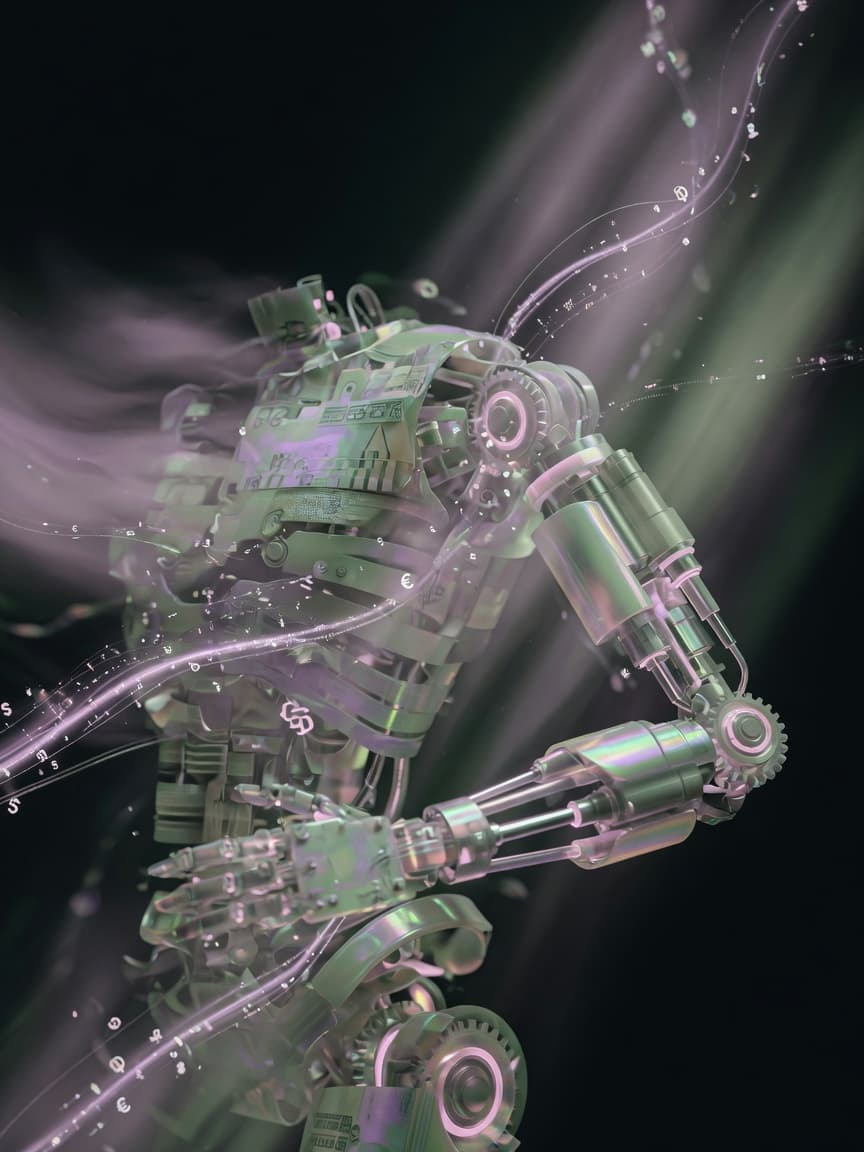
The number that defines the 2026 venture year isn't a model release or a chip order. It's this: robotics companies have raised $55.8 billion so far this year, according to Dealroom — a record that nearly doubles the previous full-year high, reached before the year is even over. Money that spent the last decade chasing software has pivoted, hard, into things that move.
For most of the AI boom, the smart-money thesis was that software was the only place to be. Bits scale for free; atoms don't. A model can be copied a billion times at zero marginal cost, while a robot has to be manufactured, shipped, serviced, and repaired one unit at a time. That asymmetry is why software commanded the premium and hardware got the discount. The 2026 funding data says investors have decided the asymmetry no longer holds — or at least that the discount was a mistake. The question worth answering is what changed their minds.
The unlock is a model architecture, not a motor
The catalyst is a class of models with an unglamorous name and enormous consequences: vision-language-action (VLA) models. They take in what a robot sees, combine it with an instruction in plain language, and output the physical actions to carry it out — perception, reasoning, and motor control fused into one learned system rather than three hand-engineered ones.
That collapse is the whole investment case. For decades a robot's "brain" was bespoke: every task demanded custom perception pipelines, motion planning, and control logic, painstakingly tuned for one environment and useless in the next. VLA models turned that brittle, per-task engineering into something that looks like a software platform — train once, generalize across tasks, improve with data. And a software platform is a thing venture capital knows exactly how to value. That's why physical-AI companies are now commanding the same rich multiples that used to be reserved for pure software: investors aren't pricing the metal, they're pricing a brain that scales like code even though it lives inside a body.
The rounds tell the story
The headline figure is built from a handful of enormous checks. Neura Robotics closed a Series C worth up to $1.4 billion, with a backer list that reads like a map of who thinks physical AI is the next platform: Tether, Qualcomm, Amazon, and Nvidia on the tech side, and European industrial heavyweights Bosch and Schaeffler plus the European Investment Bank on the other — chipmakers, cloud giants, and factory-floor incumbents all writing into the same round.
Skild AI raised its own $1.4 billion, more than tripling its valuation to over $14 billion — barely seven months after a $135 million Series B that valued it at $4.5 billion. A 3x valuation step in under a year is the kind of markup that only happens when investors are afraid of being left out of a category, not when they're carefully underwriting cash flows. That fear-of-missing-the-platform dynamic is exactly what's inflating the totals.
Underneath the megarounds is a real commercialization curve. There are now roughly twelve humanoid platforms you can actually buy or lease, up from just three in 2024. That's a fourfold expansion in buyable hardware in two years — the difference between a research demo economy and an early product economy. Capital tends to arrive right as that transition becomes visible, and it has.
The problem hiding inside the boom
A record this size, assembled this fast, carries an obvious hazard: the money is arriving well ahead of the revenue. Twelve buyable humanoid platforms is a milestone, but "buyable" is not the same as "deployed at scale doing profitable work." Most of these systems are still proving they can do useful tasks reliably enough, cheaply enough, and safely enough to justify their price against human labor. The VLA thesis is genuine, but it's a bet on a trajectory, not a report on a finished product.
That's the tension every physical-AI investor is now holding. The software-multiple valuations assume these robot brains will generalize and improve like software has — that a fleet gets smarter with every hour of operation, that data compounds, that one good model amortizes across millions of units. If that holds, today's $55.8 billion will look early and cheap. If it stalls — if the last ten percent of reliability turns out to be as brutal in robotics as it has been in self-driving — then a lot of capital priced a body like a codebase and will discover the difference the hard way.
Either way, the signal in the number is unambiguous. The most sophisticated investors in the world spent the first half of 2026 concluding that the durable value in AI is migrating from the screen to the physical world, and they moved tens of billions to be positioned for it. Software may have lost its monopoly on the AI premium. The robots didn't win the argument by being cheaper or more scalable than code. They won it by finally getting a brain that scales like code — and the money followed the brain into the body.