
The Supercar Is Now a Software Product
From Lamborghini's V8 Temerario to Porsche's hybrid 911 Turbo S, the attainable supercar tier is undergoing a quiet revolution — and the engine is only half the story.
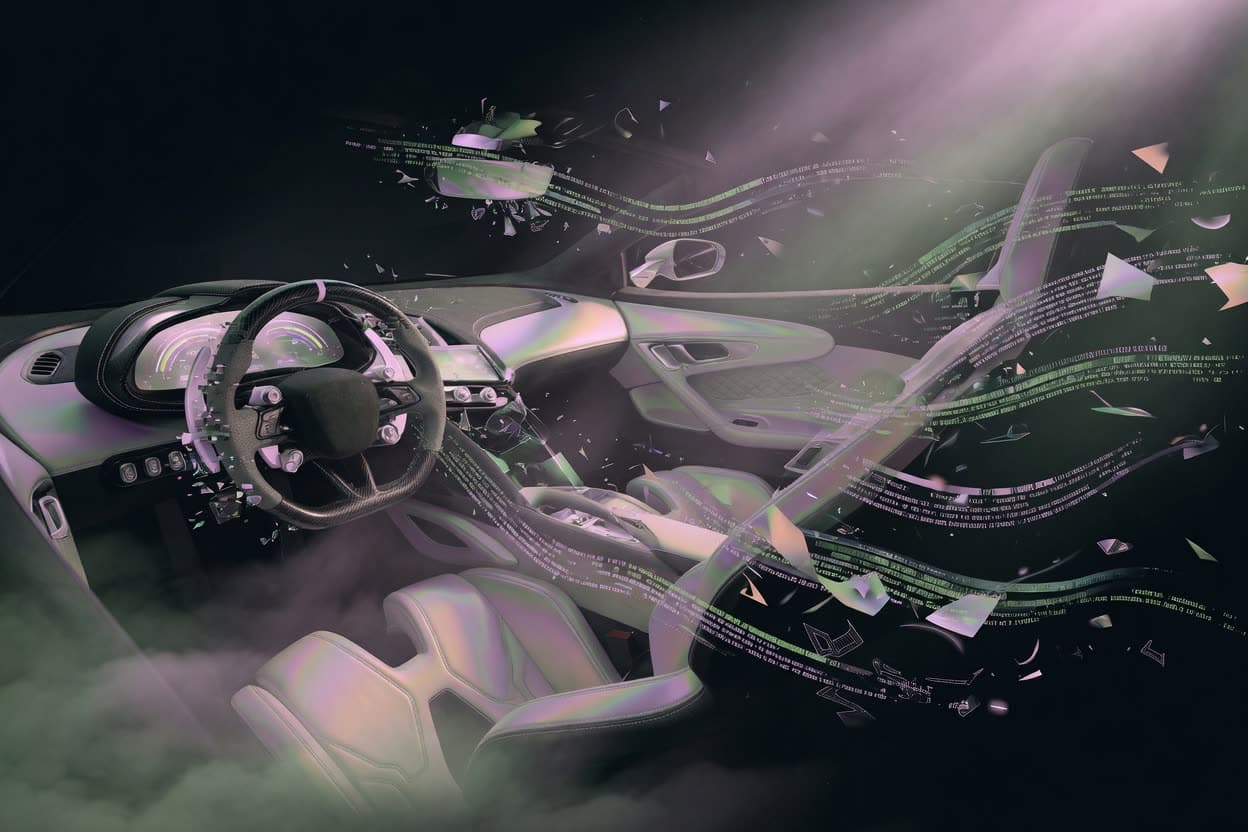
When Lamborghini delivered the first Temerario to a customer in early 2026, the car that replaced the decade-long Huracán came with something its predecessor never had: an over-the-air performance update cadence. The powertrain — a twin-turbocharged V8 with a plug-in hybrid system, producing somewhere north of 900 horsepower — was, of course, the headline. But the fine print told the more interesting story. Lamborghini's engineers built the Temerario on a software architecture designed to accept new driving modes, recalibrated torque maps, and revised stability logic as downloadable patches. The car you buy in June is measurably different from the car you'll drive in December — and that gap will keep widening.
This is the moment the supercar stopped being pure hardware.
The New Holy Trinity and What They Signal
The hypercar tier is drawing all the oxygen right now — the Ferrari F80 at $3.9 million, 799 units, a 1,200-hp V6 hybrid; the Bugatti Tourbillon at $4.6 million with a naturally aspirated V16 producing 1,800 hp and a claimed sub-two-second 0–60; the McLaren W1 at $2.1 million, 1,258 hp, and Formula 1–derived ground effect aerodynamics including a DRS mode on its active rear wing. The numbers are genuinely staggering. The tech is real.
But fixating on those cars misses where the industry is actually moving. Combined, the three will produce fewer than 1,500 units globally. They are engineering demonstrations. The real transformation is happening one tier down — in the $200,000–$500,000 attainable-supercar bracket where Porsche, Lamborghini, and McLaren move meaningful volume, and where the transition to software-defined performance is hitting fast and hard.
The supercar is becoming a subscription platform with a combustion engine bolted to it.
Porsche's Hybrid 911 and the End of Analogue Purity
The 2026 Porsche 911 Turbo S is the first 911 in history to go hybrid. The T-Hybrid system pairs the flat-six with an 82-hp electric motor and a 1.9 kWh battery — small enough that Porsche frames it as a performance aid rather than an EV play. At 711 horsepower and a 2.5-second 0–62 mph run, the numbers justify that framing. But the architecture underneath is the tell: the car now has a domain controller, over-the-air update capability, and sensor fusion software that talks to the hybrid system in real time.
Porsche is also, quietly, exploring what sits above the 911. CEO Michael Leiters confirmed to media this year that the company is running the math on a halo sports car that would sit above the current 911 lineup — likely a 918 Spyder successor. Given that even preliminary approval would put the car three to four years from production, it's a signal about direction, not an imminent launch. But the signal matters: Porsche is betting that the software-era supercar can carry a price point currently only held by full hypercars.
The AI Layer Arrives
At CES 2026 in January, the industry's messaging shifted visibly. The framing changed from "software-defined vehicles" — the phrase that dominated 2023–2025 — to "AI-defined vehicles." The distinction is meaningful. Software-defined just means the car's functions are configurable in code. AI-defined means the car is actively learning, adapting, and improving without discrete engineering interventions.
NVIDIA's automotive division, now supplying silicon to a growing roster of performance brands, is pushing toward what it calls Level 4 autonomy stacks for the track — the ability for a car to lap a circuit, analyze telemetry, and return coaching data to the driver about where time is being lost. Jaguar Land Rover and Lucid are early adopters of NVIDIA's Alpamayo compute platform. Several supercar manufacturers are in conversation. None will say who publicly, but the rumor at this year's Geneva show pointed at a major Italian brand — not Ferrari — testing autonomous track mode logic on a production-intent chassis.
General Motors, for what it's worth, disclosed this spring that nearly 90 percent of its autonomy team's codebase is now AI-generated. That's an autonomous vehicle program, not a supercar program — but it illustrates where the engineering industry's tooling has moved. The assumption that performance vehicles are immune to this shift is wrong.
The Combustion Holdout (and Why It's Rational)
There's a counternarrative worth taking seriously. High-net-worth buyers have voted with their deposit checks: hybrid yes, full electric no. The all-electric supercar segment — Rimac Nevera, Lotus Evija, Aspark Owl — has struggled to move beyond collector novelty. Rimac, for its part, is doubling down on its Nevera R (quad motors, 2,107 hp on paper), but the company makes most of its actual margin selling powertrain components to other manufacturers.
The market data supports a specific thesis: buyers in this segment want the emotional texture of combustion — sound, heat, smell, the tactile drama of a rev — wrapped in hardware that no longer falls behind a $90,000 Tesla on a straight. Hybrid architectures thread that needle. Fully electric supercars do not, yet. Battery weight remains the unsolved problem at this price point. A Nevera weighs 2,150 kilograms. A McLaren W1 weighs 1,399 kilograms. That gap is felt in every corner.
The winning formula in 2026 is not electrification. It is intelligent hybridization — combustion as the primary driver of character, electric as the performance and software layer underneath it.
What the Supercar Reveals About the Broader Market
The supercar tier has always been a laboratory for the broader automotive industry. ABS came from race cars. Carbon fiber trickled down from McLaren. Dual-clutch transmissions went from the Porsche PDK to the Volkswagen Golf. The current experiment — wrapping a performance machine in an updateable software stack, training AI on terabytes of driver telemetry, selling the car as an evolving platform rather than a finished object — will not stay at $300,000.
In three to five years, some version of what Lamborghini is shipping in the Temerario will be inside a $60,000 sports car from a Korean or Chinese manufacturer. The software-defined performance vehicle is not a supercar category story. It is the future of the entire segment, and the supercar is where it is being figured out first.
The engine is still the soul. The software is becoming the skeleton.