
Tesla Is Turning the Model S Line Into a Robot Factory
The Fremont line that built the Model S for over a decade is being repurposed for Optimus Gen 3 — a low-volume 2026 start that matters less for the robots it ships than for what Tesla is willing to give up to build them.
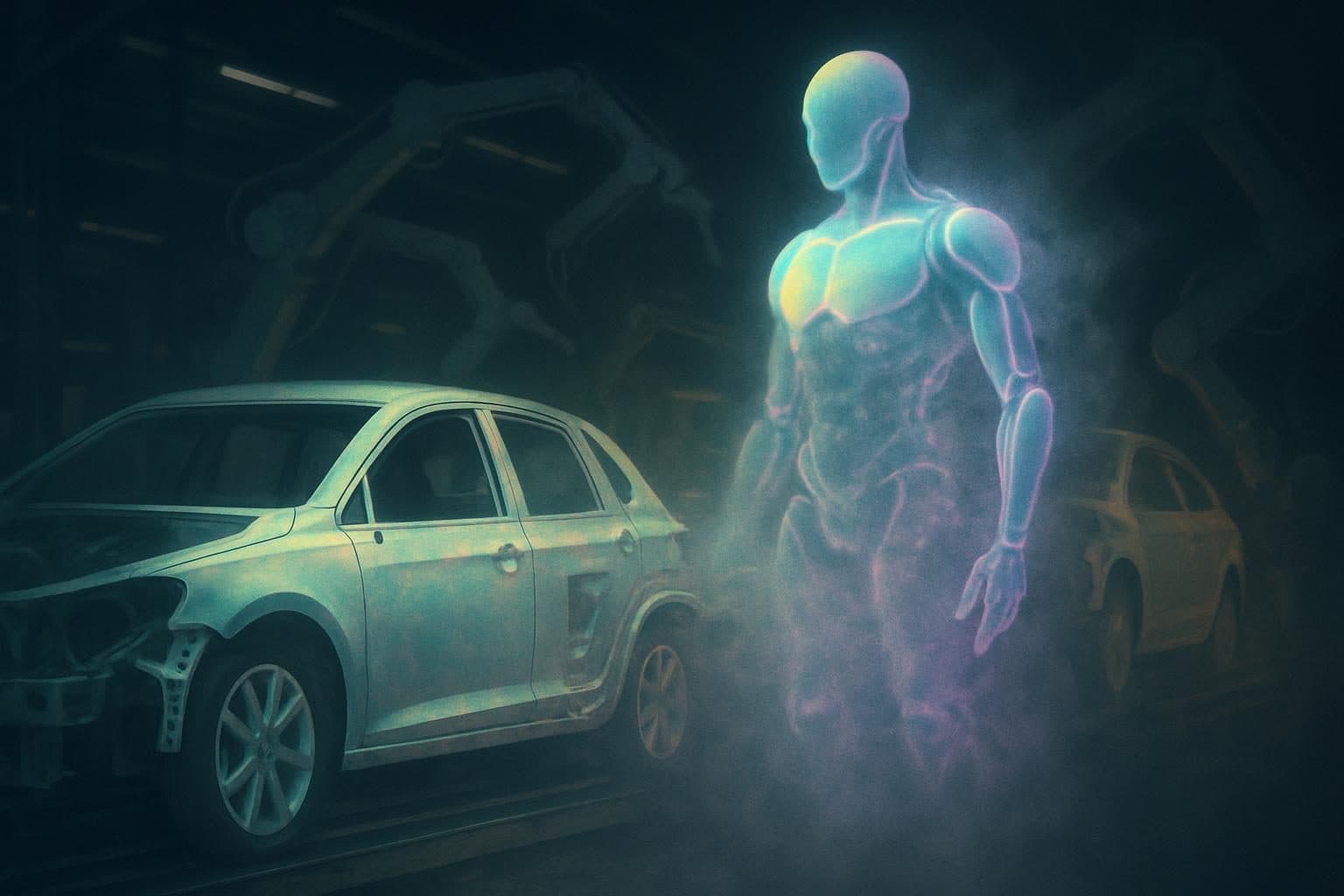
There is a particular kind of corporate signal that no press release can match: what a company is willing to tear down. This week Tesla made one of those signals, with reports that the Fremont production line that has built the Model S for more than a decade will be wound down and repurposed to manufacture Optimus, the company's humanoid robot. The Model S and Model X are both slated to phase out in 2026. The factory that made Tesla a real car company is being handed to the machine Elon Musk insists will make it something else entirely.
It is easy to read this as theater — Musk has never lacked for grand framing — but the mechanics underneath are concrete, and they tell you where the hard problems in humanoids actually live.
A low-volume year on purpose
The target is low-volume Gen 3 Optimus production in 2026, with high-volume scaling pushed to 2027. A dedicated robot factory is rising at Gigafactory Texas, with the long-range ambition — and "ambition" is the operative word — of scaling toward 10 million units a year. Those headline numbers are aspirational to the point of science fiction. The number that matters this year is the small one. 2026 is not about flooding the world with robots. It is about proving that Tesla can build them on a real line, repeatably, at acceptable cost and yield. That is the unglamorous milestone every humanoid program is now racing toward, and it is a manufacturing problem long before it is a robotics one.
That framing also explains the Fremont decision. You do not learn to mass-produce a complex electromechanical product on a greenfield site with a green workforce. You learn it on a line that already knows how to hit tolerances and move parts, staffed by people who have built hundreds of thousands of vehicles. Sacrificing the Model S line is expensive and symbolic, but it buys Tesla manufacturing maturity it cannot otherwise rent.
The hands are the whole game
The Gen 3 spec sheet makes clear where Tesla spent its engineering budget, and it is exactly where every serious humanoid team is stuck: the hands. Gen 3 reportedly doubles hand dexterity to 22 degrees of freedom, up from 11 in Gen 2 — four degrees of freedom per finger plus two at the wrist. To get there, Tesla relocated the actuators out of the hand and into the forearm, driving the fingers with tendons rather than packing motors into the digits themselves. The result is roughly 25 actuators per forearm, on the order of 50 across both arms, built around coreless motors and planetary gearboxes.
This is not a detail. A humanoid that can walk and balance is a solved-enough problem; a humanoid that can reliably pick up a wrench, a strawberry, and a coffee cup with the same hand is not. Dexterous manipulation is the capability that separates a robot that does useful work from a robot that does impressive demos, and it is bottlenecked by actuator density, tendon routing, and control — the precise things Tesla just rebuilt. The tendon-and-forearm architecture is also a tell about manufacturing intent: it concentrates the expensive, failure-prone components in a serviceable module instead of scattering tiny motors through a part that takes constant abuse.
The cost wall
Then there is the number Tesla keeps repeating and has not actually committed to: a $30,000 target price. It is explicitly aspirational, not a confirmed retail figure, and the Gen 3 design works against it. Every degree of freedom you add is another actuator, another gearbox, another point of failure and another line item. Doubling dexterity roughly doubles the most expensive part of the bill of materials. Squaring that with a five-figure price tag is the central tension of the entire program, and it is why the 2026 low-volume run matters more as a costing exercise than a product launch. Tesla needs to learn what an Optimus actually costs to build before it can know whether $30,000 is a goal or a fantasy.
It is worth staying honest about how early this is. As of late 2025, Musk himself acknowledged the robot was "not in usage in our factories in a material way," and Tesla has announced no external Optimus customers. The thing being mass-manufactured has not yet proven it can do a paying job. That is a strange foundation for a 10-million-unit factory, and it is the part the keynotes gloss over.
The race is now industrial
What makes the Fremont move land is the company it keeps. Figure's BotQ line is reportedly building a robot an hour, Apptronik's Apollo is moving into limited production, Boston Dynamics' electric Atlas is starting deployments, and 1X, Unitree, and BYD are all pushing hardware. The humanoid contest has quietly stopped being about whose robot is most capable in a highlight reel and become about whose factory is most capable in a fiscal quarter. Capability is increasingly table stakes; throughput, yield, and unit cost are the new battleground.
Tesla converting its flagship car line is the loudest statement yet that it believes the same thing. The Model S built the company's reputation. Betting its line on Optimus is Tesla wagering that the next decade of its growth comes from a machine that, as of today, cannot yet hold down a shift — and that the way to win is to learn how to build it before it learns how to work.