
The DOE Is Putting a Gigawatt of AI on a Plutonium Site
Savannah River gets a 1GW data center backed by 2GW of its own generation — because the fastest way past the interconnection queue is to never join it.
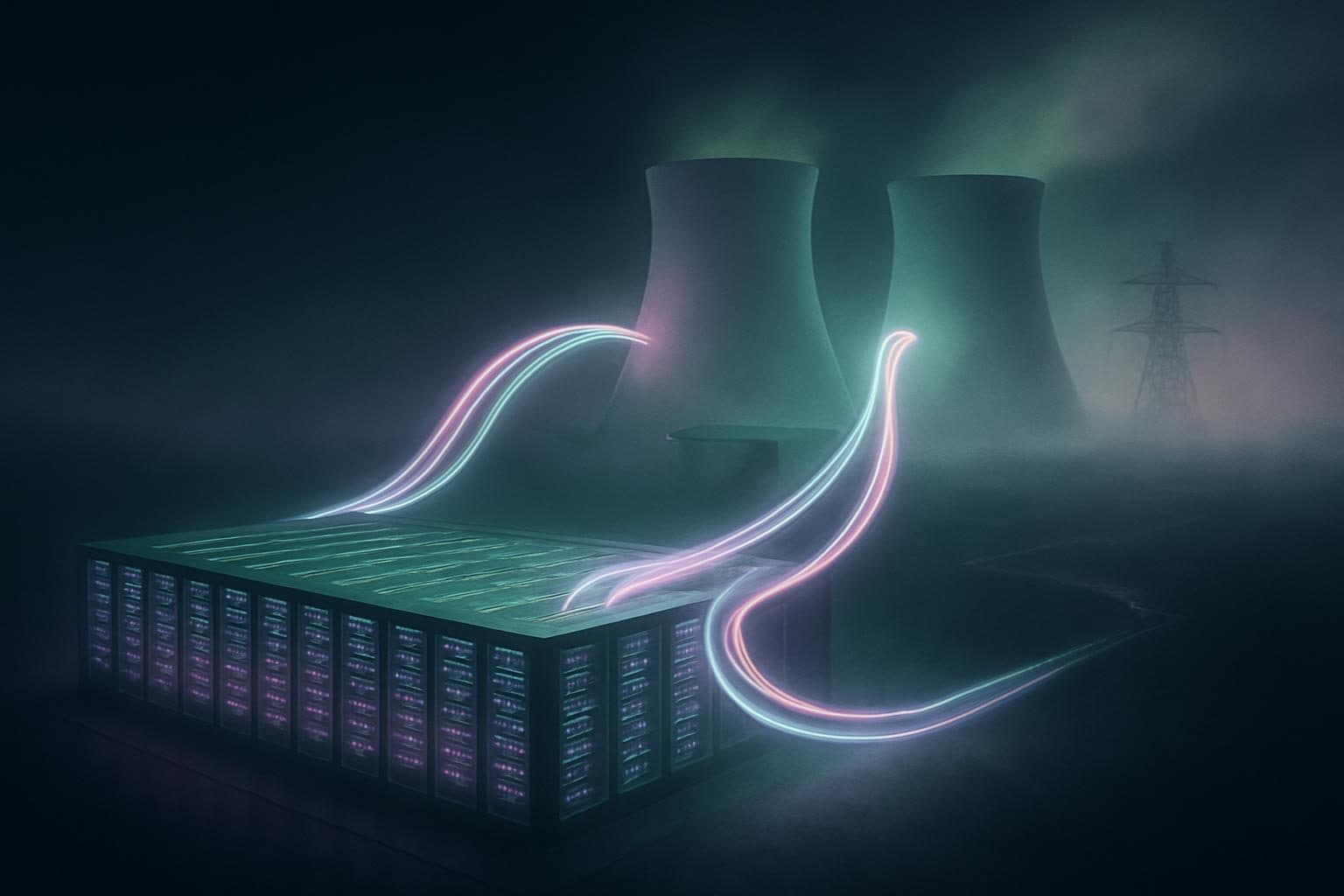
On July 20, the National Nuclear Security Administration selected Amentum to enter negotiations on a phased lease at the Savannah River Site in Aiken County, South Carolina. The proposal is a 1 gigawatt AI data center campus supported by roughly 2 gigawatts of dedicated on-site generation, starting on natural gas and bridging to advanced nuclear.
The gigawatt figure is not the interesting number. The interesting number is the second one, and the reason it is twice the first.
The constraint everyone hit at once
For two years the limiting input on AI buildout was silicon. It stopped being silicon somewhere around the middle of last year. The binding constraint now is a queue: the interconnection process by which a large load gets permission to draw from an existing transmission system, and the multi-year backlog of turbines, transformers and substation equipment required to serve it once permission arrives.
That queue is where announced gigawatts go to die. It is also where the politics live. PJM has now hit its capacity price cap three times, with data centers accounting for billions of the resulting bill, and every state in that footprint is running some version of the same argument about who pays for load that showed up faster than the grid could absorb it. FERC has been issuing large-load orders into an environment where the underlying physics has not moved.
The Savannah River proposal does not solve that problem. It exits it. The campus is behind the meter — off-grid, with its own generation, drawing nothing from the utility system that serves existing customers. NNSA's framing is explicit on the point: pairing new AI infrastructure with dedicated on-site power generation helps ensure the project's electricity needs are met without shifting costs to existing utility customers.
Strip the diplomacy and it is a concession. The federal government looked at the interconnection process it presides over, concluded it could not deliver a gigawatt on any useful timeline, and routed around it using land it already owns.
Why two gigawatts for one
The overbuild is the tell, and it encodes two separate problems.
The first is reliability. A grid-connected facility treats the grid as its backstop; a load that big, running training jobs that lose real money on an unplanned stop, needs redundancy it cannot import. When you disconnect, every contingency has to be met with owned iron, and the reserve margin gets expensive fast.
The second is the fuel transition itself. "Gas now, advanced nuclear later" is the standard formulation in every one of these announcements, and it is doing more work than it appears to. Combined-cycle gas can be sited and energised on something close to the timeline of the data center. Advanced nuclear cannot — not at commercial scale, not on a 2026 order. Building 2GW of gas capacity to serve a 1GW load gives you room to retire generation onto reactors as they arrive, without the campus going dark in the interval. It is a hedge against the nuclear half of the plan slipping, written into the capacity plan.
Read it that way and the phrase reverses meaning. This is not a nuclear-powered data center. It is a gas-powered data center with a nuclear option attached, and the option has no strike date.
The site is the actual asset
Savannah River is 310 square miles — 803 square kilometres — built in the 1950s to produce tritium and plutonium for the weapons complex, and occupied since by environmental stewardship and nuclear waste management. That inheritance is exactly what makes it usable.
Federal land does not need a rezoning fight. A site that has handled special nuclear material for seventy years has security infrastructure, a workforce with clearances, an established regulatory relationship, and — crucially — a surrounding community that has already made its peace with industrial nuclear activity. The siting objections that stall merchant data centers in Virginia and Ohio do not have the same purchase on a plutonium reservation.
Savannah River is one of four sites DOE has advanced for this purpose. The others — Idaho National Laboratory, the Oak Ridge Reservation, and the Paducah Gaseous Diffusion Plant — share the same profile. This is not a one-off lease. It is an inventory of Cold War land being converted into a parallel siting regime for compute, one that operates outside the permitting and interconnection system everyone else has to use.
Who is standing in the consortium
The partner list is more informative than the megawatts. DC BLOX is the digital infrastructure partner. The consortium also includes Milliken & Company, Google, and Nucor.
Nucor is a steelmaker, and steelmaking is one of the few industrial processes whose power appetite is comparable to a hyperscale campus. Its presence signals that the generation build is not scoped solely to servers — it is regional industrial capacity with a data center as anchor tenant. Google's presence signals offtake: someone intends to buy the compute, which is the question that usually goes unanswered in federal infrastructure announcements. Milliken supplies the local industrial anchor in a state where that matters politically.
NNSA Administrator Brandon Williams framed the project as strengthening American leadership in artificial intelligence, expanding reliable energy generation, and strengthening national security — the three-way justification that lets a weapons agency host commercial compute without anyone having to pick which mission is primary.
What to watch
Selection to negotiate a phased lease is not a signed lease, and a phased lease is not a built campus. The RFP went out last September; the gap between announcement and energisation is where these projects reveal themselves.
Three things are testable. Does the gas generation get permitted and delivered on a schedule that beats the interconnection queue it was designed to avoid — because turbine lead times bind whether or not you touch the grid. Does any advanced nuclear commitment acquire a date. And does the ratepayer pledge survive contact with the first request to sell surplus power back into the system, which is the point at which "behind the meter" quietly stops being true.
The precedent is set regardless. The federal government has decided the fastest route to a gigawatt of AI is its own land, its own generation, and no interconnection application at all. Everyone still waiting in the queue just learned what the queue is worth.