
Thermal-Noise Chips Could Cut AI Image Generation Energy by Up to 10,000x
Experimental hardware that harvests physical noise for probabilistic computation threatens to reshape the economics of GPU-heavy generative workloads — if it scales.
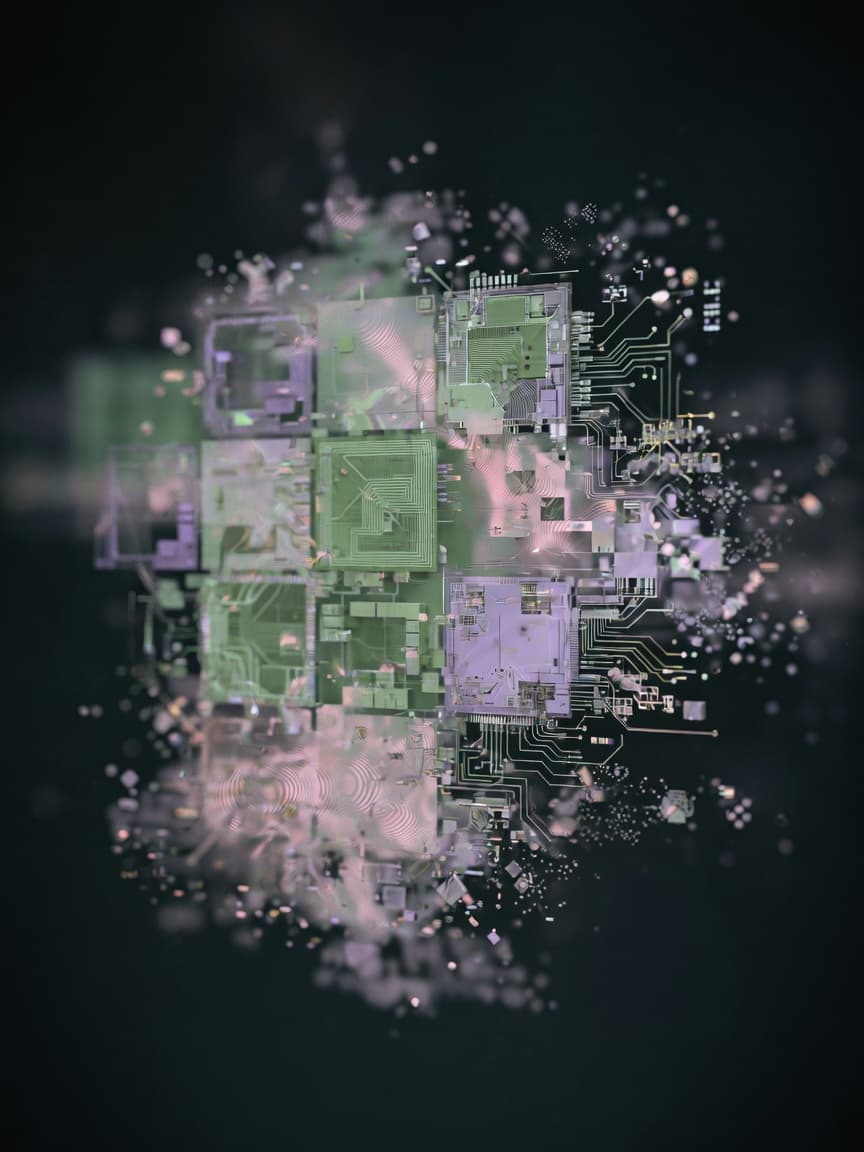
The biggest cost center in AI infrastructure right now isn't talent or cloud margin — it's the electricity bill for running generative models at scale. Researchers have now unveiled experimental chips that could attack that problem directly, promising an energy reduction of up to 10,000 times compared to conventional digital hardware for AI image generation tasks.
That is not a rounding error. It is a potential order-of-magnitude rewrite of what it costs to run diffusion models and video generation pipelines in a data center.
The Physics of the Approach
The technology doesn't fight thermal noise — it uses it. Conventional digital chips treat noise as an enemy to be suppressed; deterministic logic demands clean, stable signals. These experimental chips instead exploit the inherent thermal noise in physical systems to perform probabilistic computation.
The alignment with generative AI is not incidental. Diffusion models and similar architectures are fundamentally sampling operations — they draw from probability distributions to construct images. Stochastic analog hardware, by its physical nature, already speaks that language. The computation isn't fighting its medium; it is its medium.
This reframes the design philosophy entirely: away from deterministic digital logic and toward what researchers are calling stochastic analog computing — a foundation for a new class of specialized "physical AI" accelerators built around the behavior of matter rather than against it.
What This Targets
The work is explicitly aimed at one of the largest cost drivers in AI infrastructure: the power consumed by GPU-based generative models running inside data centers. Those GPUs are power-hungry by design — optimized for parallel floating-point throughput, not energy efficiency per probabilistic sample.
Image-heavy workloads are the acute pain point. Advertising, entertainment, and any enterprise pipeline that runs diffusion models or video generation at volume faces compounding electricity and cooling costs that scale directly with output. The researchers flag these industries as prime early beneficiaries of the approach.
Cooling is as important as raw power draw. Every watt a GPU consumes becomes a watt of heat that a data center must remove — often consuming additional energy to do so. A 10,000x reduction in energy per image-generation task doesn't just cut the power bill; it fundamentally changes the thermal management problem.
The Scaling Question
The honest caveat embedded in every claim here is the phrase "if scaled." These are experimental chips. The gap between a laboratory demonstration and a production accelerator that can replace or complement GPU racks is not trivial — it involves manufacturing yield, integration with existing software stacks, and the economics of building out a new supply chain for analog stochastic hardware.
None of that is impossible. But the history of novel computing substrates — neuromorphic chips, optical processors, analog ML accelerators — is a history of promising lab results that took longer than expected to reach deployment, or found narrower niches than initially anticipated.
What makes this case worth watching is that the target workload is unusually well-matched. Probabilistic sampling is not a marginal operation in generative AI; it is the core operation. If the performance holds at meaningful scale, thermal-noise chips would not need to be general-purpose to matter enormously.
The Bigger Shift
The underlying signal here is larger than one chip architecture. AI infrastructure built entirely on digital, deterministic silicon was always a temporary equilibrium — one inherited from decades of general-purpose computing rather than designed from first principles for probabilistic inference. The energy math is now forcing the question that convenience deferred.
Thermal-noise computing is one answer. It won't be the only one. But the emergence of hardware explicitly designed around the statistical nature of generative AI — rather than bolted onto legacy digital logic — marks the beginning of a serious hardware divergence. Enterprises watching their AI energy bills should treat this as early signal, not background noise.
The era of "physical AI" accelerators has an opening argument. The verdict depends on what happens when these chips leave the lab.