
xAI Plants a European Supercomputer in Luleå, Repurposing a Former Facebook Data Center
By converting an existing high-capacity facility in northern Sweden, xAI is building out a multi-region training infrastructure for Grok — and betting that low-carbon compute is the next strategic lever.
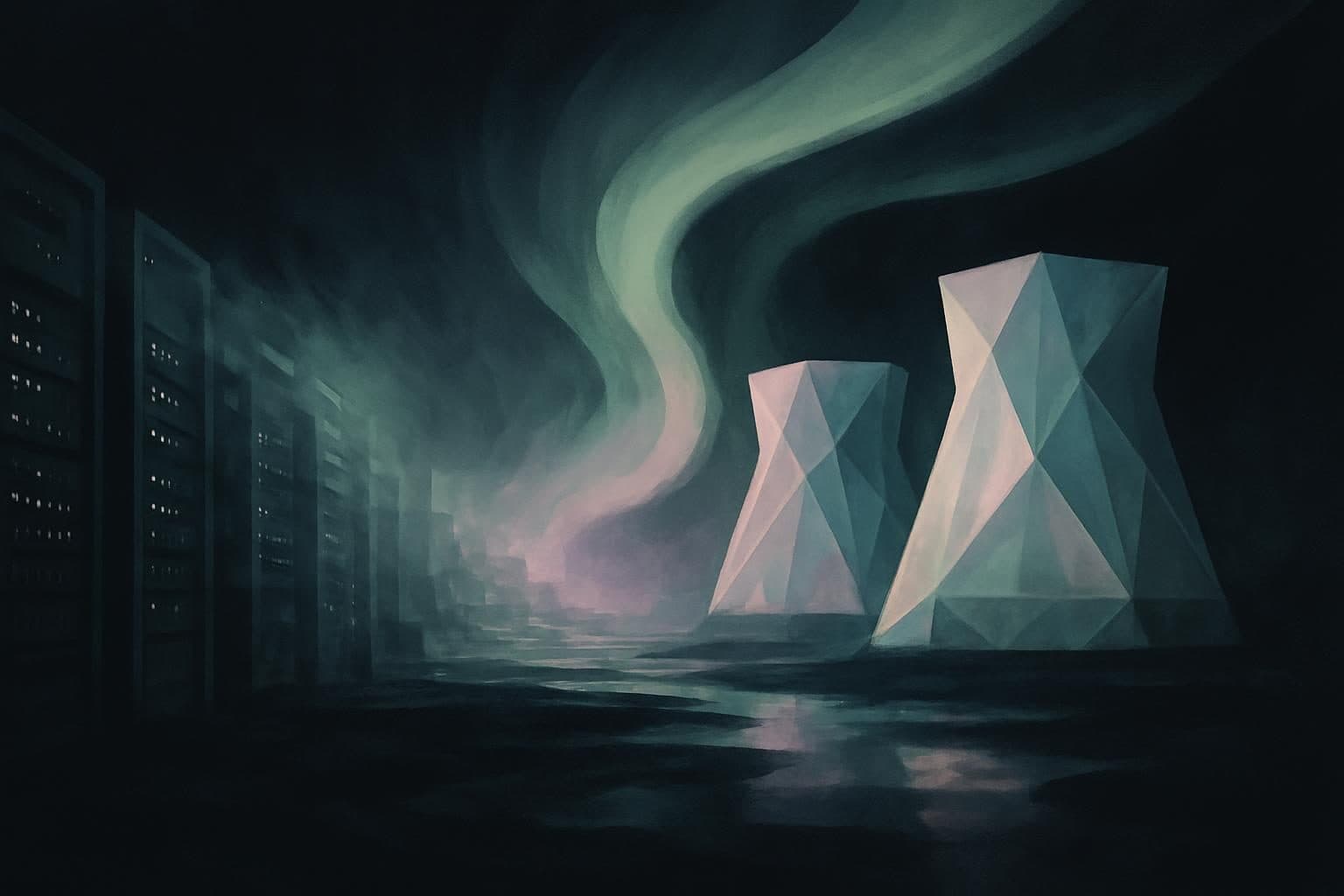
xAI is opening a supercomputer facility in Luleå, Sweden — a move that tells you more about where the AI infrastructure race is heading than any single domestic build announcement.
The site is a repurposed former Facebook data center, which matters enormously from an execution standpoint. xAI isn't breaking ground on raw land. It's inheriting high-capacity power delivery and industrial cooling systems that took years and significant capital to construct. The practical effect: faster time-to-train and a substantially compressed permitting surface — though regional authorities have confirmed that permitting and environmental reviews are still underway to enable AI operations at scale.
Tens of Thousands of GPUs, One Former Social-Media Campus
Local reports indicate the Luleå facility is designed to host tens of thousands of GPUs, which would place it among Europe's largest dedicated AI clusters when fully operational. That figure is meaningful context for anyone tracking the continent's compute capacity. Europe has lagged behind the U.S. and increasingly China in purpose-built AI training infrastructure. A single site at this density meaningfully shifts the regional picture.
The choice to repurpose rather than build new is also a signal about where efficiency pressure now sits in the industry. Constructing a hyperscale data center from scratch — permitting, civil works, transformer procurement, cooling design — routinely takes three to five years in Europe. Inheriting an existing shell with working infrastructure compresses that dramatically. For a company whose core competitive asset is the speed at which it can iterate on Grok, that timeline compression is not incidental — it is the strategy.
Sweden's Grid as a Competitive Moat
The facility is expected to leverage Sweden's low-carbon grid mix, a point that deserves more than a sustainability checkbox read. Northern Sweden runs heavily on hydropower. Luleå in particular sits close to major hydro generation capacity, which means the electricity feeding these GPUs carries a genuinely low carbon intensity — not an offset, not a renewable energy certificate arbitrage, but actual low-emissions baseload.
This matters for two converging reasons. First, enterprise and government customers are beginning to demand carbon accounting on AI inference and training workloads. A training run conducted on Sweden's grid produces a materially different lifecycle footprint than one conducted on a coal-heavy grid. Second, regulatory pressure in the EU is tightening around data center emissions. Siting compute in Sweden is a structural hedge against future compliance cost — not just a messaging decision.
The cold northern climate also reduces mechanical cooling load, which is one of the largest operating expenses and failure points in dense GPU clusters. Facebook originally chose Luleå for exactly these reasons. xAI is now inheriting that logic.
A Multi-Region Infrastructure Strategy Takes Shape
The Luleå agreement follows xAI's previously announced plans for a massive supercomputer in the United States. That sequencing is the most strategically significant fact in this story. xAI is no longer building one flagship training site — it is constructing a geographically distributed compute architecture.
Multi-region AI infrastructure serves several functions that a single domestic cluster cannot. It provides redundancy against regulatory disruption — if policy in one jurisdiction restricts certain training activities, operations can shift. It enables training runs that are geographically closer to European data sources and European regulatory frameworks, which increasingly require data residency. And it distributes the organization's exposure to any single power grid's reliability or pricing volatility.
The broader pattern here is one the hyperscalers — Microsoft, Google, Amazon — have been executing for years: treat compute capacity as a geographically diversified asset base, not a single facility. xAI is now running the same playbook, at a stage of company development where most AI labs are still consolidated in one region.
The Bigger Shift
What Luleå signals is that the frontier AI build-out is entering its infrastructure-maturation phase. The first wave was about acquiring GPUs. The second was about building the power and networking fabric to run them. The third — now underway — is about distributing that infrastructure across jurisdictions, grids, and regulatory environments with the same rigor that serious technology companies apply to cloud architecture.
xAI repurposing a former Facebook data center in arctic Sweden is not a footnote. It is an early data point in the normalization of AI compute as critical global infrastructure — sited, permitted, and operated with the same strategic calculus as energy assets or financial exchanges. The companies that get that architecture right in the next two years will have a structural advantage that no amount of model cleverness will easily overcome.